

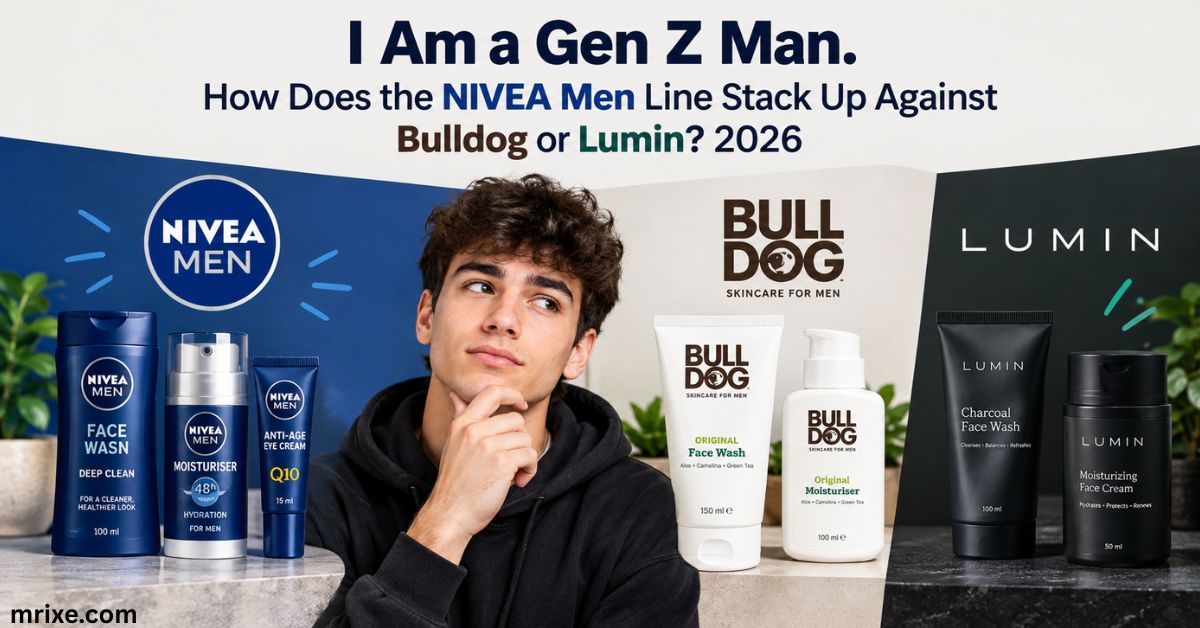
“i am a genz man. how does the nivea men line stack up against bulldog or lumin?” — that’s the exact question that keeps popping up in comment sections, group chats, and late-night Google searches. So let’s actually answer it, ingredient by ingredient, dollar by dollar.
Skincare stopped being a “girl thing” a while ago, and honestly, it was never really that in the first place. Your skin doesn’t check your gender before it breaks out, dries up, or gets sunburned. What’s changed is that Gen Z men are the first generation to grow up with skincare content everywhere, from TikTok routines to Reddit threads dissecting every ingredient label. That means more choice, but also more noise.
Three names keep coming up whenever this topic gets discussed: NIVEA Men, Bulldog, and Lumin. One’s a drugstore staple that’s been around for decades. One’s a natural-origin brand built entirely around men’s grooming. And one’s a premium, subscription-based skincare company that leans hard into targeted treatments. This article breaks down exactly how they compare, what’s actually in the bottles, and which one deserves a spot in your bathroom cabinet.
The Real Question Isn’t “Which Brand,” It’s “Which Bottle Fits My Life”
Here’s the thing nobody tells you when you start looking into skincare: the “best” brand doesn’t exist in a vacuum. What exists is the best brand for your skin, your budget, and how much effort you’re actually willing to put in. A guy who showers, brushes his teeth, and leaves has very different needs than a guy who already uses a serum and a jade roller.
Gen Z Men Are Buying Skincare, But Most Still Want It Fast and Cheap
Surveys on men’s grooming habits consistently show the same pattern: interest in skincare among younger men has grown a lot over the past five years, but actual routines stay simple. Most guys want a cleanser and a moisturizer that does its job in under two minutes. Anything more complicated tends to get abandoned within a few weeks. That’s not laziness. It’s realism. A routine you’ll actually stick with beats a perfect routine you’ll quit by February.
What This Comparison Actually Covers (Cleanser, Moisturizer, SPF, Price)
To keep this fair, every brand gets judged on the same four things:
- Cleansers – how they wash your face without stripping it dry
- Moisturizers – hydration, texture, and whether they feel greasy
- SPF options – because sunscreen is the single most important anti-aging product that exists
- Price per use – not just the sticker price, but what it actually costs you per month
With that framework set, let’s dig into each brand on its own terms first.
NIVEA Men: What’s Actually in the Bottle
NIVEA has been making skin products since 1911, and the NIVEA Men line has been a fixture in drugstores for decades. It’s not flashy. It’s not marketed as “premium.” What it is, though, is consistent, affordable, and available basically everywhere.
The Sensitive Line: Chamomile, Vitamin E, and 0% Alcohol
NIVEA Men’s Sensitive range is built specifically for skin that reacts easily to fragrance, alcohol, or harsh actives. The formulas lean on chamomile extract and vitamin E to calm irritation, and several products in the line are labeled as alcohol-free, which matters if your skin gets tight or red after shaving.
Key ingredients you’ll commonly find in the Sensitive line include:
- Chamomile (Chamomilla Recutita) extract for calming
- Vitamin E for antioxidant support
- Provitamin B5 (panthenol) for hydration
- Licochalcone A, an anti-irritant derived from licorice root
If your skin turns pink after a razor pass or reacts to strong fragrance, this is the corner of NIVEA’s lineup worth starting with.
NIVEA Men’s SPF Moisturizers: SPF15 vs. SPF30, and Why That Gap Matters
This is where a lot of guys get confused, and it’s worth clearing up properly. NIVEA Men sells sensitive-skin moisturizers in both SPF15 and SPF30 versions, and the difference isn’t small.
| SPF Level | UVB Rays Blocked | Real-World Meaning |
|---|---|---|
| SPF15 | About 93% | Fine for short, low-sun days |
| SPF30 | About 97% | Better daily-driver protection |
| SPF50 | About 98% | Best for long outdoor exposure |
That jump from 93% to 97% might look small on paper, but over years of daily use, it adds up to a meaningful difference in sun damage and premature aging. If you’re choosing between the two, the SPF30 version is worth the extra cost for a daily moisturizer, especially if you spend any real time outside.
Where You’ll Find It (and Why That’s the Real Selling Point)
NIVEA Men isn’t trying to reinvent skincare. Its biggest advantage is distribution. You can find it at pharmacies, supermarkets, and big-box stores in nearly every country, usually for less than the price of a fast-food meal. There’s no waiting for shipping, no subscription commitment, and no guessing whether it’ll be in stock next month.
NIVEA Men Pros
- Cheap and easy to find — no shipping wait, no subscription
- Genuinely gentle formulas in the Sensitive range
- SPF options built into daily moisturizers, which most competitors don’t offer at this price
- Dermatologically tested, with decades of consumer data behind the formulas
- Great starter option if you’ve never used a skincare product beyond bar soap
NIVEA Men Cons
- Formulas skew basic — don’t expect targeted anti-acne or anti-aging actives
- Most products still contain added fragrance (parfum), even in the “sensitive” range
- Packaging and branding feel dated compared to newer brands
- Limited high-performance options for guys with more specific skin goals
Bulldog: The Natural-Origin Pitch, Tested Against Its Own Ingredient List
Bulldog Skincare launched in the UK in 2006 as one of the first grooming brands built specifically around natural-origin ingredients for men. It’s now sold in dozens of countries and tens of thousands of stores, and it’s owned by Edgewell Personal Care, the same company behind several other personal care brands.
What “Natural-Origin” Actually Means on a Bulldog Label
Bulldog markets itself around botanicals like aloe vera, green tea, and witch hazel. Worth knowing: “natural-origin” doesn’t mean “100% natural.” It means a percentage of the formula’s ingredients are derived from natural sources, while the rest of the formula still includes standard cosmetic ingredients like preservatives (phenoxyethanol), emulsifiers, and fragrance to keep the product stable and pleasant to use. That’s not a knock against the brand. Nearly every skincare product on the market works this way. It’s just worth understanding before you assume “natural” means “nothing synthetic.”
The Original Range: Aloe Vera, Green Tea, and Camelina Oil
Bulldog’s flagship Original line centers on:
- Aloe vera leaf juice for soothing and light hydration
- Green tea extract for its antioxidant properties
- Camelina sativa seed oil to help lock in moisture
This range is aimed at normal-to-combination skin and works well as a simple daily cleanser-and-moisturizer combo without any heavy actives.
The Oil Control Range: Witch Hazel and Willow Bark for Breakout-Prone Skin
If your skin runs oily or you deal with regular breakouts, Bulldog’s Oil Control line is the more relevant option. It’s built around:
- Witch hazel, a natural astringent that helps reduce excess oil
- Willow bark extract, which contains salicin, a compound related to salicylic acid
- Juniper, added for its cleansing properties
Willow bark is worth flagging here because it’s a genuinely useful ingredient for oily and breakout-prone skin, even though it’s milder than the pharmaceutical-grade salicylic acid you’d find in a dedicated acne treatment.
Bulldog’s Fragrance Problem (Yes, “Natural” Products Still Use Parfum)
Here’s an honest gap in Bulldog’s positioning: despite the “natural” branding, most of its products still list parfum (fragrance) in the ingredients, along with common fragrance-related compounds like limonene and linalool. These aren’t dangerous ingredients for most people, but if you have genuinely sensitive or reactive skin, “natural” doesn’t automatically mean “safer for you.” Always check the actual ingredient list, not just the marketing copy on the front of the bottle.
Bulldog Pros
- Sold in sets, which makes it easy to grab a full routine in one purchase
- Willow bark and witch hazel give the Oil Control line real function, not just marketing
- Mid-range pricing that’s still accessible for most budgets
- Certified cruelty-free, which matters to a lot of younger buyers
- Widely available online and in major retailers
Bulldog Cons
- “Natural-origin” claims can be misleading if you assume it means fragrance-free
- No dedicated line for cystic or severe acne
- Some moisturizers run on the lighter side for very dry skin
- Scent is stronger than NIVEA’s more neutral formulas, which won’t suit everyone
Lumin: The Subscription Model, and What You’re Actually Paying For
Lumin positions itself as a premium, targeted skincare brand built specifically for men, and it sells almost entirely through a subscription model rather than one-off retail purchases. This is the biggest structural difference between Lumin and the other two brands, and it changes how you should think about the price tag.
How the Lumin Subscription Works (Sets, Refills, Discounts)
Rather than buying single products, Lumin sells curated sets built around a specific goal. You pick a set, get it delivered on a recurring schedule (usually every couple of months), and receive a discount for staying subscribed instead of buying one-time. Prices for starter sets generally begin around the $45–$60 range, with subscription pricing bringing that down noticeably compared to a one-time purchase.
What’s in the Classic Maintenance Set vs. the Age Management Set
Lumin structures its lineup around goals rather than skin types, which is a genuinely different approach from NIVEA and Bulldog:
| Set | Focus | Typical Products Included |
|---|---|---|
| Classic Maintenance | Building a basic habit | Cleanser, moisturizing balm, exfoliating rub |
| Age Management | Fine lines and fatigue | Moisturizing balm, anti-wrinkle serum, dark circle treatment |
| Correction Trio | Targeted problem areas | Moisturizer, exfoliator, dark circle defense |
This structure is genuinely useful if you know what you’re trying to fix. It’s less useful if you’re brand new to skincare and don’t yet know what your actual skin concern is.
The Gap Nobody Mentions: Lumin Has No Dedicated Acne Treatment
This is one of the more important things to know before subscribing. Lumin’s lineup leans heavily toward anti-aging, brightening, and dark-circle correction. If breakouts and active acne are your main concern, Lumin simply doesn’t have a dedicated, medicated acne product the way a brand focused on that concern would. Its charcoal cleanser can help with oil, but it’s not a substitute for a targeted acne treatment.
Lumin Pros
- Genuinely targeted formulas for aging, dark circles, and dullness
- Subscription model rewards consistency with lower per-set pricing
- Sleek, modern branding that appeals to guys who want skincare to feel less clinical
- Flexible options — sets, individual products, or build-your-own routines
- Generally paraben and sulfate-free formulations
Lumin Cons
- No dedicated acne-fighting product in the core lineup
- Priced well above NIVEA Men and Bulldog per ounce
- Subscription model means you need to actively manage or cancel it if you stop wanting shipments
- Not sold in physical stores, so no trying before you buy
Price-Per-Use, Not Sticker Price: The Numbers Side by Side
This is the part most comparisons skip entirely, and it’s honestly the most useful section for a Gen Z guy watching his budget. A $10 bottle that lasts two months beats a $30 bottle that lasts three weeks, even though the second one looks “cheaper” at checkout.
NIVEA Men: Lowest Cost, Widest Availability
A NIVEA Men moisturizer typically runs somewhere between $6 and $14 depending on size and SPF level, and a bottle can easily last a couple of months with daily use. There’s no subscription fee, no shipping cost, and no minimum order.
Bulldog: Mid-Range, Sold in Sets
Bulldog’s full skincare sets (cleanser, moisturizer, and sometimes a scrub or shave gel) usually land somewhere in the $18–$30 range for the bundle, which works out to a reasonable per-product cost once you break it down. Buying items individually costs a bit more per bottle than buying the set.
Lumin: Highest Cost, But Subscription Cuts It Down
Lumin’s starter sets generally start around $45–$60 for a one-time purchase, with subscription pricing bringing the ongoing cost down by roughly 15–20% per shipment. It’s the most expensive of the three by a clear margin, even with the subscription discount factored in.
| Brand | Starter Cost | Approx. Cost Per Month (Ongoing) | Where Sold |
|---|---|---|---|
| NIVEA Men | $6–$14 per product | $5–$10 | Pharmacies, supermarkets, big-box stores, online |
| Bulldog | $18–$30 per set | $10–$18 | Major retailers, drugstores, online |
| Lumin | $45–$60 per set | $35–$50 (with subscription) | Lumin’s own website only |
The takeaway: NIVEA Men wins on affordability by a wide margin, Bulldog sits comfortably in the middle, and Lumin charges a real premium for its targeted formulas and subscription convenience.
Ingredients Head-to-Head: What Each Brand Is Actually Built Around
Every brand has a “signature approach” once you look past the marketing. Here’s how they actually differ at the formula level.
NIVEA Men’s Anti-Irritation Approach (Chamomile, Licochalcone A)
NIVEA’s sensitive formulas focus on calming ingredients rather than active treatment ingredients. Chamomile and licochalcone A (a licorice-root derivative) are both known for reducing redness and irritation, which makes sense given NIVEA’s core audience: guys who just want their skin to stop feeling tight and irritated after shaving.
Bulldog’s Botanical Approach (Witch Hazel, Aloe, Green Tea)
Bulldog leans on plant-derived actives that have a light functional effect — witch hazel for oil control, aloe for soothing, green tea for antioxidant protection. None of these are powerhouse actives in the way a dermatologist-grade ingredient would be, but they’re genuinely useful for everyday maintenance rather than treating a specific skin condition.
Lumin’s Active-Ingredient Approach (Vitamin C Serum, Charcoal, Retinol Alternatives)
Lumin’s formulas skew closer to what you’d find in higher-end women’s skincare, just reformulated for men’s thicker, oilier skin. Expect ingredients like vitamin C for brightening, activated charcoal for drawing out oil and impurities, and gentler retinol-alternative ingredients aimed at fine lines. This is the most “advanced” ingredient approach of the three, and it shows in the price.
Fragrance Across All Three: None of Them Are Truly Fragrance-Free by Default
Here’s a fact that surprises a lot of people: all three brands use added fragrance in most of their core products, even the ones marketed toward sensitive skin. If you have genuinely reactive skin, don’t assume “for sensitive skin” means fragrance-free. Always check the actual ingredient panel for the word “parfum” or “fragrance,” and look for products explicitly labeled fragrance-free if that’s a dealbreaker for you.
Which One Fits Your Actual Skin Concern

Let’s cut straight to the practical part. Skip the branding and match the product to your actual skin.
Sensitive or Easily Irritated Skin → NIVEA Men Sensitive Line
If your skin reacts to almost everything, the NIVEA Men Sensitive range is the safest starting point. It’s been tested extensively, it’s inexpensive enough to experiment with, and the chamomile-and-vitamin-E formula is genuinely mild.
Oily or Breakout-Prone Skin → Bulldog Oil Control or Lumin’s Charcoal Cleanser
Both brands offer something useful here, but for different reasons. Bulldog’s Oil Control range, with witch hazel and willow bark, is the more affordable everyday option. Lumin’s charcoal cleanser goes deeper on oil absorption but costs noticeably more and isn’t a real substitute for a medicated acne treatment if breakouts are severe.
Dry Skin or Early Fine Lines → Lumin’s Age Management Set
If hydration and early signs of aging (fine lines, dullness, tired-looking eyes) are your main concern, Lumin’s targeted approach genuinely outperforms the other two here. This is where the higher price actually buys you something the drugstore options don’t offer.
Zero Time, Zero Budget → NIVEA Men, Full Stop
If you want the absolute simplest, cheapest way to start taking care of your skin, NIVEA Men wins without much competition. One tube of sensitive moisturizer with SPF, used daily, covers most of what a basic routine needs to accomplish.
Quick example: Picture a 22-year-old who works outdoors part-time and has never used anything beyond bar soap. His skin isn’t sensitive, oily, or particularly dry — it’s just neglected. In that situation, a $10 NIVEA Men SPF30 moisturizer does more real good than a $60 Lumin set, simply because he’ll actually use it every day without thinking twice about the cost.
Can You Build a Routine by Mixing All Three?
Yes, and honestly, a lot of guys end up doing exactly this without realizing it’s allowed.
Why Mixing Brands Is Normal (and Not a Downgrade)
There’s a myth that you need to buy everything from one brand for it to “work properly.” That’s not how skincare functions. A cleanser, moisturizer, and treatment product don’t need to share a logo to work well together. What matters is that the ingredients don’t conflict and that each product does its specific job well.
One Combo That Actually Works: NIVEA Cleanser + Bulldog Moisturizer + Lumin Serum
Here’s a realistic, budget-conscious combo that plays to each brand’s strengths:
- Morning cleanse: NIVEA Men Sensitive face wash — gentle, cheap, gets the job done
- Daily moisturizer: Bulldog Oil Control — controls shine without stripping skin
- Weekly treatment: Lumin’s vitamin C serum — a targeted boost without a full subscription commitment
This kind of mix-and-match approach lets you spend more where it actually matters (a targeted treatment) and less where a basic formula does the job just as well (cleansing).
The One Rule When Mixing: Don’t Layer Two SPF or Two Active Products
The one thing to actually watch for when mixing brands: don’t apply two different SPF products at once, and be careful stacking multiple active ingredients (like two exfoliants or two vitamin C products) on the same day. That’s how irritation happens. Pick one product per “job” in your routine, regardless of which brand it comes from.
A Two-Minute Routine That Covers 90% of What You Need
Skincare doesn’t need to be complicated to be effective. Here’s a routine that works with products from any of the three brands.
Morning: Cleanser, SPF Moisturizer, Done
- Splash your face with lukewarm water and use a gentle cleanser
- Pat dry, don’t rub
- Apply an SPF moisturizer (NIVEA Men’s SPF30 is a strong budget pick here)
That’s it. Three steps, under two minutes.
Night: Cleanser, Plain Moisturizer, Done
- Cleanse again to remove the day’s buildup
- Apply a regular (non-SPF) moisturizer to lock in hydration overnight
When a Serum or Targeted Treatment Actually Earns a Spot
Once the basics are locked in as a habit, that’s the point to consider adding a serum or targeted treatment, whether that’s Lumin’s vitamin C serum for dullness or a dedicated acne treatment for breakouts. Adding actives before the basic routine is consistent almost always leads to giving up on the whole thing within a month.
Mistakes That Waste Money on Any of These Three Brands
Buying the Anti-Aging Set Before You Need It
If you’re 22 and don’t have fine lines yet, an anti-aging serum isn’t doing much for you. Save that purchase for when you actually start noticing changes, usually mid-to-late 20s at the earliest for most people.
Skipping SPF Because “It’s Just Moisturizer”
SPF is genuinely the single most effective anti-aging product that exists, and it’s also the one guys skip most often. Sun damage is cumulative and mostly irreversible, so daily SPF, even on cloudy days, matters more than any serum you could buy.
Assuming “Natural” on the Bulldog Label Means Hypoallergenic
As covered earlier, natural-origin doesn’t mean fragrance-free or automatically gentler. If you have reactive skin, check the ingredient list, not the front-of-bottle marketing.
Subscribing to Lumin Before Testing a Single-Set Purchase
Since Lumin runs primarily on subscriptions, it’s worth buying a single set as a one-time purchase first if that option’s available, rather than committing to recurring shipments before you know whether the formulas actually agree with your skin.
The Verdict
Best for Budget and Convenience: NIVEA Men
If price and availability matter most to you, NIVEA Men is the clear winner. It’s cheap, it’s everywhere, and the Sensitive line with SPF is genuinely well-formulated for the price point.
Best for a Simple Botanical Routine: Bulldog
If you want a straightforward routine built around recognizable natural ingredients, without the complexity of targeted treatments, Bulldog hits a comfortable middle ground on price and function.
Best for Targeted, Subscription-Based Skincare: Lumin
If you have a specific concern, whether that’s early aging, dark circles, or dullness, and you don’t mind paying a premium for it, Lumin’s targeted approach is the most sophisticated of the three.
The Brand That Wins Is the One You’ll Actually Finish the Bottle Of
Here’s the honest truth: the “best” skincare brand is the one whose bottle doesn’t sit half-used in your cabinet for six months. Consistency matters more than any single ingredient or brand name. A $10 NIVEA moisturizer used every day beats a $60 Lumin set used twice and forgotten about.
FAQs
Is NIVEA Men strong enough for actual sun protection?
Yes, especially the SPF30 version. It blocks around 97% of UVB rays, which is solid daily protection for most guys who aren’t spending hours in direct sun.
Does Bulldog work for acne, or just general cleansing?
Bulldog’s Oil Control line, with witch hazel and willow bark, helps manage excess oil and mild breakouts, but it’s not a medicated acne treatment. For persistent or cystic acne, a dedicated treatment product or dermatologist visit is the better route.
Is the Lumin subscription easy to cancel?
Lumin’s subscription is managed through your account on their site, and cancelling before your next scheduled shipment stops future charges. It’s worth checking the current cancellation window on their site before subscribing, since policies can be updated over time.
Do any of these three brands work for beards, or just bare skin?
All three focus primarily on face and skin care rather than beard-specific products, though a good moisturizer benefits skin underneath a beard just as much as bare skin. None of the three brands covered here specializes in beard oil or beard-specific grooming.
Is spending more on Lumin worth it over NIVEA Men?
It depends entirely on your skin concern. For basic hydration and sun protection, NIVEA Men delivers comparable results for a fraction of the price. For targeted concerns like fine lines or dark circles, Lumin’s more advanced formulations genuinely offer something the drugstore option doesn’t.

Nathan Cooper is a humor writer who enjoys creating clever puns, witty jokes, and lighthearted content that brings smiles to readers. He loves sharing fresh, family friendly humor that’s fun, engaging, and easy to enjoy.