

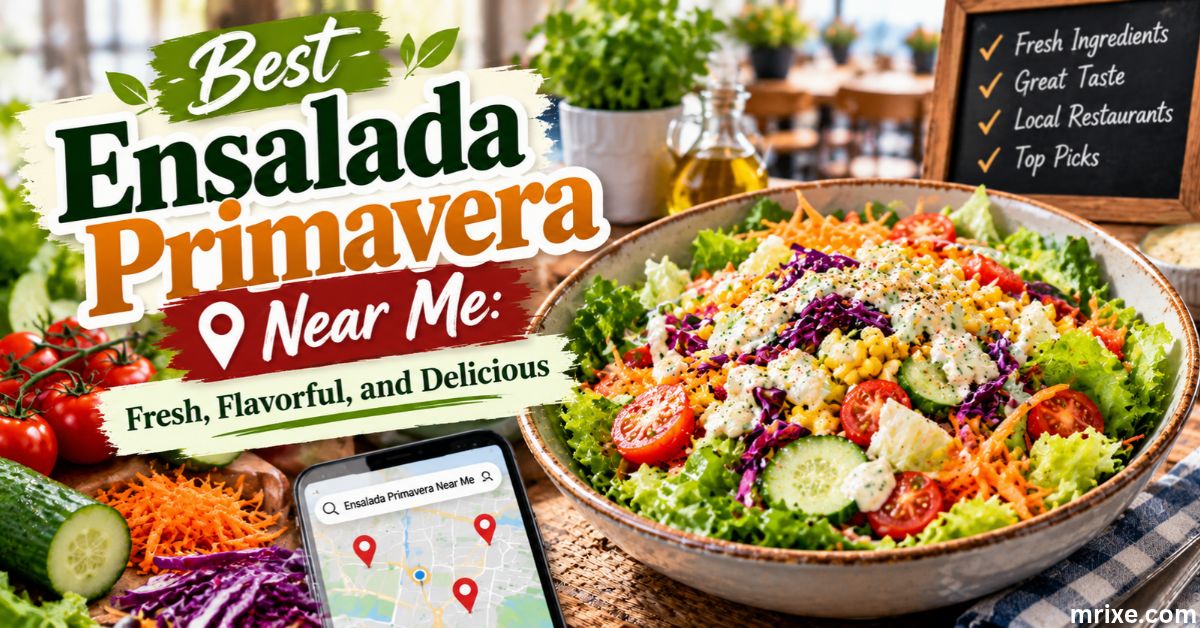
You’re hungry for something crisp, colorful, and light. You type a few words into your phone and hit search. Then the results show you five dishes that share one name and almost nothing else.
That’s the quirk of ensalada primavera. The name means “spring salad.” Restaurants treat it as a theme rather than a fixed recipe. One kitchen sends out tender greens with a lemon vinaigrette. Another piles on egg, corn, and tuna. A third serves pasta.
This guide helps you sort it out. You’ll learn what the dish really is and where the name comes from, with no invented legends. You’ll also learn how to track down the best ensalada primavera near me without wasting a lunch break. Along the way, you’ll get a quality checklist, a home recipe, and the latest US nutrition numbers.
What Is Ensalada Primavera? The Spring Salad Explained
Start with the translation. Primavera is the Spanish and Italian word for spring. Spanish dictionaries list ensalada primavera and ensalada de primavera as the translation of “spring salad,” a cold dish made of seasonal spring foods.
That tells you the idea, not the recipe. No official ingredient list exists. No governing body decides what qualifies. The name promises freshness, color, and seasonality. Everything else changes from kitchen to kitchen.
Patterns still show up. One recent guide lists the usual components as lettuce or mixed leaves, tomato, carrot, peas, corn, onion, and hard-boiled egg. Treat that as a common starting point, not a rule.
The Building Blocks of a Spring Salad
Most versions follow the same layered logic. Here’s how the layers usually work:
| Layer | What it does | Common choices |
|---|---|---|
| Base | Adds volume and crunch | Romaine, butter lettuce, mixed greens, arugula |
| Color and sweetness | Brightens the plate | Tomato, carrot, peas, corn |
| Bite | Adds snap and spice | Radish, onion, cucumber |
| Richness | Makes it filling | Hard-boiled egg, avocado, cheese, chicken, tuna |
| Dressing | Ties everything together | Lemon or vinegar vinaigrette, creamy herb dressing |
Ensalada Primavera vs. Pasta Primavera: Don’t Mix Them Up
These two dishes share a name and little else. Searching for one often turns up the other, so it pays to know the difference.
| Feature | Ensalada primavera | Pasta primavera |
|---|---|---|
| Served | Usually cold | Usually warm |
| Base | Greens and raw vegetables | Pasta with sautéed vegetables |
| Typical sauce | Vinaigrette or light dressing | Butter, cream, and cheese in the classic version |
| Documented origin | None | Le Cirque restaurant, New York, 1970s |
The classic pasta version uses sautéed spring vegetables in a sauce of butter, cream, and cheese. A menu line that says only “primavera” could mean either dish. Look for the word “salad” or “ensalada” before you order.
The Real History Behind Ensalada de Primavera
Here’s the honest answer: nobody has documented who first made an ensalada primavera. The name describes a type of dish. It doesn’t mark a single invention.
What We Can Say About the Name
Italian cooks use alla primavera to signal a dish with fresh vegetables. A risotto alla primavera, for example, features fresh asparagus and peas. Spanish-speaking kitchens follow the same seasonal logic when they build a spring salad.
You may run into pages that claim more. Some websites say ensalada primavera is a Mexican dish that began in the early 20th century. Those pages name no source. Until someone produces a cookbook, menu, or archive that backs it up, treat the claim with caution.
The Pasta Primavera Story: A Well-Documented Cousin
The pasta version has a paper trail. That makes it a useful case study in how a “spring” dish spreads.
Case study: how Le Cirque turned a spring dish into a national craze
- The place: Le Cirque, a French restaurant in Manhattan. Italian restaurateur Sirio Maccioni opened it in 1974.
- The dish: Spaghetti or pasta primavera appears in print from 1976.
- The creator: Nobody agrees on one name. Maccioni claimed his wife, Egidiana, threw it together from ingredients on hand during a Nova Scotia trip. Artist and amateur cook Edward Giobbi says he showed a similar dish to Maccioni and chef Jean Vergnes, who then modified it.
- The kitchen drama: Maccioni said the French chefs refused to serve pasta, so cooks set up a pot in a hallway and finished the plates in the dining room.
- The result: Food writer Craig Claiborne called it “by far, the most talked-about dish in Manhattan.”
Dates vary by source. Some accounts say 1974. Others say 1975 or 1976. Maccioni himself said he invented it in 1974. The mismatch shows how quickly food legends drift.
The dish also isn’t Italian. Primavera is Italian for spring, but the dish was invented at Le Cirque in New York. The same source notes that it lost its seasonality once it became a year-round menu fixture.
Why Origin Stories Deserve a Raised Eyebrow
Names travel faster than facts. A dish called “spring salad” can pick up a flag, a century, and a legend in a few blog posts. The practical lesson for you is simple. Skip the folklore and ask what’s in the bowl today.
How to Find the Best Ensalada Primavera Near Me
The best ensalada primavera near me depends on what you want from it. A light side for a heavy entrée needs a different plate than a full lunch. Decide first. Then search.
Decide What Kind of Spring Salad You Want
Ask yourself three quick questions:
- Do you want a light side or a filling meal?
- Do you prefer raw vegetables only, or are cooked items fine?
- Do you have dietary limits, such as vegan, gluten-free, or an egg or nut allergy?
Your answers shape every search that follows.
Search Smarter Than the Obvious Phrase
Typing “ensalada primavera near me” works, but variations catch more menus. Try these:
- “ensalada de primavera”
- “spring salad”
- “ensalada mixta”
- “fresh garden salad”
- “salad bar,” plus “vegan” or “gluten-free” if you need it
Then use your maps app well. Filter by “open now.” Scan the newest customer photos, because they show what the kitchen serves today. Read recent reviews first. Finally, open the restaurant’s own menu to confirm the ingredients.
Where You Can Often Find a Spring Salad
Availability varies, so call ahead when you can. These spots tend to serve fresh salads under a variety of names:
- Latin American and Spanish restaurants
- Cafés and bakeries with lunch menus
- Salad counters and build-your-own salad shops
- Grocery store delis and prepared-food sections
- Prepared-food stalls at farmers markets
Read the Menu Like a Pro
A menu description reveals a lot before you walk in. Use this table as a quick filter:
| Menu clue | Good sign | Red flag |
|---|---|---|
| Ingredients | Names specific vegetables | Says only “mixed salad” |
| Dressing | Named and described | Not mentioned at all |
| Seasonality | Mentions seasonal or local produce | Same description all year |
| Protein | Listed with a clear portion | Vague or hidden |
| Photos | Crisp, bright, colorful | Wet, flat, or heavily sauced |
Questions Worth Asking Before You Order
Servers hear these all the time. You’ll get better answers and a better salad:
- What’s in the ensalada primavera today?
- Is the dressing made in-house?
- Do you dress it to order, or is it pre-mixed?
- Does it contain egg, nuts, dairy, or gluten?
- Can I get the dressing on the side?
What Separates a Great Spring Salad From a Sad One
The best ensalada primavera near me and the worst one can share a menu name. Quality shows up in a handful of details. Learn them once and you’ll spot them everywhere.
Freshness You Can See
Look for crisp leaves, bright color, and a dry bowl. Brown edges, wilted tips, and pooled liquid mean the salad sat too long.
Temperature matters too. Here’s a real case from food safety history. After more than 20 multistate outbreaks between 1998 and 2008, regulators added cut leafy greens to the list of foods that need time and temperature control. FDA advice to restaurants says to refrigerate cut leafy greens at 41°F or less and to avoid greens that show rot or damage.
What does that mean for you? A chilled, crisp salad isn’t just tastier. It’s a sign the kitchen handles greens properly.
Seasoning and Dressing
A salad needs salt and acid just like any other dish. Under-seasoned greens taste flat. Over-dressed greens taste soggy.
A good kitchen coats the leaves lightly. You should taste lemon or vinegar, a little salt, and the vegetables themselves.
Texture, Color, and Balance
Great versions mix crunchy, soft, and juicy elements. Think radish snap against creamy avocado or soft egg. Color helps too. A plate with green, red, orange, and white usually offers more variety in flavor and nutrients.
Ensalada Primavera Styles You’ll See on Menus
Menus differ by country and even by neighborhood. No authoritative regional list exists. So this guide describes styles instead of assigning dishes to specific countries.
| Style | What’s usually in it | Best for |
|---|---|---|
| Light garden style | Greens, tomato, cucumber, carrot, vinaigrette | A side dish or light lunch |
| Hearty style | Greens plus egg, corn, peas, tuna or chicken | A full meal |
| Pasta-based “primavera” | Pasta, sautéed vegetables, cheese or cream sauce | A warm dinner |
| Grilled-vegetable style | Charred asparagus, zucchini, peppers over greens | Cooler evenings |
| Fruit-forward spring style | Greens with strawberries or citrus | A sweeter, lighter plate |
The first two styles match what most people mean by the name. If you want a true salad, scan the description for greens and a vinaigrette. If you want something filling, look for protein on the ingredient list.
Health Benefits of Ensalada Primavera: What the Numbers Say
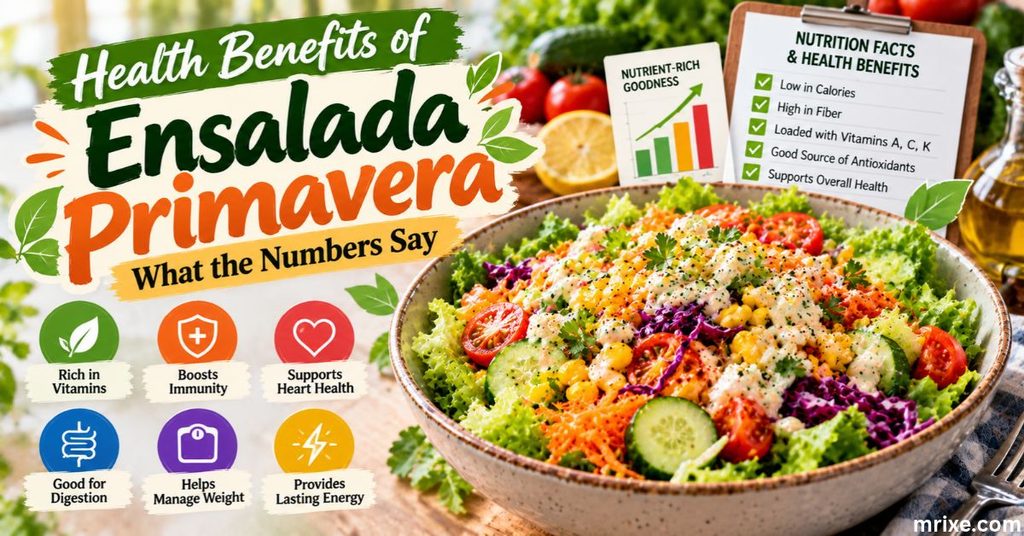
A vegetable-forward salad helps you hit daily goals. Here are the current US numbers, with sources.
The Federal Guidelines in Plain English
The Dietary Guidelines for Americans, 2025–2030, came out on January 7, 2026. For a 2,000-calorie pattern, they recommend three servings of vegetables and two servings of fruit per day. The key message boils down to “Eat real food.”
What counts as a serving? One cup of raw or cooked vegetables counts as a serving, and so do two cups of raw leafy greens. So a bowl with two cups of greens and a cup of chopped vegetables could cover two of your three daily vegetable servings. Portions vary a lot by restaurant, so measure your own at home.
Most Americans Fall Short
The gap between the guideline and real life is wide. CDC’s 2019 survey analysis found that 12.3% of adults met fruit recommendations and 10.0% met vegetable recommendations. The state-level spread is striking. Vegetable intake ranged from 5.6% in Kentucky to 16.0% in Vermont.
| Measure | Figure | Source |
|---|---|---|
| Daily vegetables (2,000-calorie pattern) | 3 servings | Dietary Guidelines, 2025–2030 |
| Daily fruit (2,000-calorie pattern) | 2 servings | Dietary Guidelines, 2025–2030 |
| Adults meeting vegetable recommendations (2019) | 10.0% | CDC |
| Adults meeting fruit recommendations (2019) | 12.3% | CDC |
| Lowest and highest state for vegetables | 5.6% (Kentucky), 16.0% (Vermont) | CDC |
The report lists cost, limited availability, and access as barriers to eating more produce. A salad you can make for a few dollars at home goes a long way here.
When a Light Salad Stops Being Light
A salad isn’t automatically a light meal. Creamy dressings, cheese, fried toppings, croutons, and candied nuts can turn a bowl of greens into a heavy plate. Ask for dressing on the side. Then add it a little at a time.
Dietary Needs and Allergens
Ensalada primavera adapts easily, but check the details:
- Vegan: Skip the egg and cheese. Confirm the dressing has no honey or dairy.
- Gluten-free: Watch for croutons and pasta add-ins.
- Egg allergy: Hard-boiled egg is a common topping, so ask before ordering.
- Nut allergy: Some kitchens add nuts for crunch. Ask directly.
How to Make Fresh Ensalada Primavera at Home
Can’t find the best ensalada primavera near me? Make it yourself. It takes about 20 minutes, and you control every ingredient.
Ingredients (Serves Four)
| Ingredient | Amount |
|---|---|
| Mixed tender greens | 8 cups |
| Fresh or thawed frozen peas | 1 cup |
| Thin asparagus spears, trimmed and cut in 1-inch pieces | 8 spears |
| Radishes, thinly sliced | 6 |
| Carrots, shaved with a peeler | 2 medium |
| Cherry tomatoes, halved | 1 cup |
| Hard-boiled eggs, quartered (optional) | 4 |
| Chopped fresh herbs (parsley, chives, dill) | ¼ cup |
Lemon-Dijon vinaigrette: 3 tablespoons extra-virgin olive oil, 1 tablespoon lemon juice, 1 teaspoon Dijon mustard, ¼ teaspoon salt, and black pepper to taste.
Eight cups of greens gives each person two cups, which is one vegetable serving under the federal guideline.
Step-by-Step Directions
- Rinse all produce under running water. CDC advises against using bleach or other disinfectants to wash produce.
- Boil the asparagus and peas in salted water for one to two minutes. Move them to ice water. Drain well. (You can skip this step and use them raw.)
- Whisk the vinaigrette ingredients in a small bowl.
- Layer the greens, vegetables, and herbs in a large bowl.
- Toss with the dressing right before serving.
- Top with egg and serve.
If you want a no-cook shortcut, try a recipe like Oregon State University Extension’s spring green salad, which takes 15 minutes with no cooking and makes 10 cups.
Dressing Options Beyond the Basics
| Dressing | Quick formula | Works best with |
|---|---|---|
| Lemon-Dijon vinaigrette | 3 parts olive oil, 1 part lemon, a dab of mustard | Almost everything |
| Red wine vinegar and oregano | 3 parts olive oil, 1 part vinegar, pinch of oregano | Tomato-heavy bowls |
| Herb yogurt | Plain yogurt, lemon, chopped dill and chives | Radish and cucumber |
Make It Ahead and Store It Safely
Prep the parts in advance. Keep the dressing separate until serving. Food safety rules matter here:
- Keep leafy greens, salads, and pre-cut produce in a clean refrigerator set to 40°F or colder.
- Refrigerate cut produce within 2 hours, or within 1 hour if it sits in temperatures above 90°F, like a hot car or picnic.
- Use refrigerated cut produce within a few days.
Tips for Buying the Freshest Ingredients for Ensalada Primavera
A salad is only as good as its produce. Shopping with the seasons gives you better flavor and often better prices.
What’s in Season in Spring
Spring produce varies by region. This table pulls from two public lists:
| Region | Spring produce |
|---|---|
| Northeast | Fiddleheads, lettuces and greens, asparagus; rhubarb and radishes arrive late |
| Northwest | Asparagus, lettuces, radishes, rhubarb |
| Great Lakes, Ohio Valley, Midwest | Asparagus, lettuces and greens, peas, radishes, rhubarb, parsnips |
| South Central | Asparagus, beets, broccoli, cabbage, cucumbers, lettuces and greens, peas, radishes |
Sources: Farmers’ Almanac for the Northeast; Administration for Community Living seasonal produce chart for the other regions.
Timing matters as well. April is peak asparagus season. Shell peas and similar varieties are often best in May. Your local market may run a few weeks earlier or later.
How to Shop for Crisp, Fresh Produce
Use these tips at any grocery store or farmers market:
- Pick perfect leaves. Choose leafy greens and vegetables that aren’t bruised or damaged.
- Choose cold bagged greens. FDA advises choosing fresh-cut produce that’s refrigerated or surrounded by ice.
- Ask the grower. At a farmers market, ask when the produce was picked.
- Check the dates. Bagged fresh-cut leafy greens typically last about 12 to 16 days. Choose the freshest date available.
- Buy small. Spring produce wilts quickly. Shop for a few days at a time.
Keep It Crisp at Home
Store perishable vegetables in a clean fridge at 40°F or below. An inexpensive refrigerator thermometer lets you check it. Dry your greens well. Excess water speeds wilting.
Ensalada Primavera Near Me: Frequently Asked Questions
What does ensalada primavera mean?
It means “spring salad” in Spanish. The name points to fresh, seasonal produce rather than a fixed recipe.
Is ensalada primavera the same as pasta primavera?
No. Ensalada primavera is a cold salad. Pasta primavera is a warm dish with a documented 1970s history at Le Cirque in New York.
What’s usually in an ensalada primavera?
Common ingredients include greens, tomato, carrot, peas, corn, onion, and sometimes hard-boiled egg. Every kitchen varies, so always check the menu.
How do I find the best ensalada primavera near me?
Search several names, including “ensalada de primavera” and “spring salad.” Read recent reviews and photos. Check the menu for specific ingredients. Then ask about freshness and dressing.
Can I get an ensalada primavera that’s vegan or gluten-free?
Usually, yes. Skip egg and cheese for vegan, and avoid croutons or pasta for gluten-free. Always confirm the dressing and toppings with the kitchen.
How long does homemade ensalada primavera last?
Store the undressed vegetables in the refrigerator at 40°F or colder and use them within a few days. Add the dressing right before serving.
Final Thoughts on Finding Great Ensalada Primavera
Three ideas cover everything above. First, the name describes a category, so ask what’s inside. Second, freshness is the whole point, and you can see it in crisp leaves, bright color, and a properly chilled bowl. Third, you always have a backup plan. A homemade version takes 20 minutes and costs little.
Start your search with a few name variations. Read the menu closely. Order with confidence. The best ensalada primavera near me might be a café down the street. It might also be the bowl you toss together tonight with spring asparagus and a squeeze of lemon.

Nathan Cooper is a humor writer who enjoys creating clever puns, witty jokes, and lighthearted content that brings smiles to readers. He loves sharing fresh, family friendly humor that’s fun, engaging, and easy to enjoy.