


Search for cnlawblog and you’ll land on a pile of pages that don’t agree with each other. One calls it a compliance resource. Another calls it a general law blog. A third ties it to Chinese law and its global reach. That confusion is exactly why this guide exists.
Here’s what you’ll get. First, a straight look at how to treat the brand. Next, a tour of the Chinese laws that matter most in 2026, with real dates and figures. After that, a practical method for testing any legal source before you trust it. Skim the tables if you’re in a hurry. Read the case studies if you want to see how the rules play out in real life.
What Is CNLawBlog? A Realistic Look at the Brand
The name suggests a blog about Chinese law. Several pages online describe cnlawblog that way, and others describe it more broadly as a legal explainer site covering business, technology, and everyday legal questions. Because the descriptions vary so much, the smartest move is to treat it as a starting point rather than a final authority.
That isn’t a criticism. It’s how you should treat every legal blog, including famous ones. A blog can point you toward a topic. Only the statute, the regulation, or a licensed lawyer can settle it.
How to Judge Any Legal Blog in Two Minutes
Open the site and look for these signals before you rely on a single sentence:
| Trust signal | What a good answer looks like |
|---|---|
| Named authors | Real people with a bio and a verifiable professional background |
| Credentials | Bar admission or legal qualification stated clearly |
| Contact details | A working email or office address, not just a form |
| Editorial policy | A statement on corrections and how often content is reviewed |
| Dates | Both a publication date and a “last updated” date on each article |
| Source links | Links to the statute or agency notice, not just other blogs |
If a site fails most of these checks, read it for ideas only. Then confirm every fact somewhere else.
Rule of thumb: A legal blog tells you what to ask. A lawyer tells you what to do.
Is CNLawBlog the Same as China Law Blog?
No evidence ties the two together, so don’t assume they’re the same. The names look similar. That’s about all they share.
China Law Blog is a long-running publication run by a law firm that focuses on China-related business law. CNLawBlog is a separate name that appears on a different set of domains. Mixing them up can cause real trouble. Imagine citing the wrong site in a memo to your board.
Quick Checks Before You Cite Either Site
- Check the domain. Look at the full web address, not just the page title.
- Check the About page. It should say who publishes the content.
- Check the author byline. A named lawyer is a good sign.
- Check the dates. Chinese law changes fast, and a 2022 article can mislead you in 2026.
Short on time? Cite the underlying law instead of either blog. It’s safer.
How Chinese Law Works: The Basics Every Reader Needs
Before you can use any Chinese legal blog well, you need a map. China runs a civil law system. Written statutes drive outcomes more than past court decisions do. That’s the opposite of the common law approach you’ll find in the United States or the United Kingdom.
The Legal Hierarchy at a Glance
| Level | Who issues it | Example |
|---|---|---|
| Constitution | National People’s Congress (NPC) | The supreme legal document |
| Laws | NPC and its Standing Committee | Civil Code, Company Law |
| Administrative regulations | State Council | Commercial Mediation Regulation |
| Departmental rules | Ministries and agencies | Rules from the Cyberspace Administration of China |
| Local regulations | Provincial and city congresses | Rules for a free trade zone |
| Judicial interpretations | Supreme People’s Court | Guidance on how courts apply a law |
Higher levels override lower ones. If a ministry rule conflicts with a national law, the law wins.
Three Systems, Not One
Mainland China, Hong Kong, and Macau each run their own legal systems. Hong Kong keeps a common law tradition under its Basic Law. Macau follows a civil law model with Portuguese roots. A blog that says “Chinese law” without naming the jurisdiction is leaving out something important.
Draft, Adopted, Effective: Three Different Dates
Many readers mix up these stages. A law usually moves through a draft that’s open for public comment. Next comes formal adoption by the legislature. Finally comes the effective date, when it starts binding people. A story about a “new law” may describe any of the three. Always check which one.
Chinese Business Law in 2026: The Rules Foreign Companies Meet First

If you do business with or in China, a handful of laws shape almost every decision. Some are brand new. Others have settled into daily practice.
Key Business Laws and Their Dates
| Law | Key date | What changed or why it matters |
|---|---|---|
| Foreign Investment Law | Effective January 1, 2020 | Replaced the older separate laws on equity joint ventures, contractual joint ventures, and wholly foreign-owned enterprises |
| Company Law (revised) | Effective July 1, 2024 | Major overhaul of governance and capital rules |
| Anti-Unfair Competition Law (amended) | Promulgated June 27, 2025; effective October 15, 2025 | Sharper rules for online and platform competition |
| Arbitration Law (revised) | Adopted September 12, 2025; effective March 1, 2026 | Grew from 78 to 96 articles across eight chapters |
| Foreign Trade Law (revised) | Reported as adopted December 27, 2025; effective March 1, 2026 | First comprehensive overhaul in over two decades |
| Commercial Mediation Regulation | Effective May 1, 2026 | A stand-alone regulation focused on commercial mediation |
Confirm the Foreign Trade Law and mediation details against official texts before you act on them.
The Company Law Update, Explained Simply
The 2024 revision changed how companies are built and run. One headline feature deals with capital. Shareholders of a limited liability company now have to pay in their subscribed capital within five years of the company’s founding. Existing companies got a transition window to adjust, which runs until June 30, 2027. If you own shares in a Chinese entity, check your articles of association now. Don’t wait until the deadline.
Practitioners also note that many details remain vague. Further official guidance is expected, so this area deserves regular checking.
The Anti-Unfair Competition Law and Online Brands
The 2025 amendment speaks directly to how companies behave online. It treats the unauthorized use of influential account names, app names, or icons as potential confusion. It also covers using someone else’s registered trademark as part of an enterprise name. Using a competitor’s product name or trademark as a search keyword without permission can fall under the law too.
Illustrative case study: The keyword trap.
A consumer electronics seller runs paid ads in China. To grab traffic, it buys a rival’s brand name as a search keyword and builds a landing page that looks similar. Under the amended law, that pattern could count as an act of confusion. The fix is simple. Bid on generic terms, keep branding distinct, and have counsel review campaigns before launch.
Sanctions and Countermeasures
China’s Anti-Foreign Sanctions Law lets the state respond to foreign measures. In 2026, an order placed six U.S. entities on the countermeasure list under that law. For companies in sensitive sectors, this is a reminder that geopolitics can reach compliance desks. Add sanctions screening to your China risk checklist.
How Does Chinese Civil Law Affect Individuals and Businesses?
For most people, the Civil Code is the law that touches daily life. It took effect on January 1, 2021, and pulled much of China’s private law into one text of more than 1,200 articles. Think of it as the rulebook for contracts, homes, families, and personal rights.
The Seven Books of the Civil Code
| Book | What it covers | Everyday example |
|---|---|---|
| General Provisions | Basic principles, legal capacity, and legal persons | Whether a minor can sign a contract |
| Property Rights | Ownership, land use rights, and security interests | Using a home as loan collateral |
| Contracts | Formation, performance, and breach | A supply agreement gone wrong |
| Personality Rights | Privacy, reputation, and image | A photo used in an ad without consent |
| Marriage and Family | Marriage, divorce, and adoption | Dividing assets after a divorce |
| Succession | Wills and inheritance | Passing property to relatives |
| Tort Liability | Compensation for harm | A product that injures a customer |
Succession: The Estate Planning Piece
People often ask about wills and inheritance. The Succession book answers most of those questions. It sets out who inherits when someone dies without a will and which kinds of wills the law recognizes. Cross-border estates get complicated fast. A family with property in two countries should talk to a lawyer in each.
Why Businesses Should Care
Contract law sits at the center of nearly every deal. Clear drafting still matters more than anything else. Define delivery dates, payment terms, quality standards, and dispute resolution in writing. Disputes rarely start with villains. They start with vague wording.
What Should Businesses Know About Chinese Privacy and Data Law?
Data rules form one of the fastest-moving parts of Chinese law. Three statutes carry most of the weight, and each plays a different role.
The Three Pillars
| Law | In force since | Main focus |
|---|---|---|
| Cybersecurity Law | June 1, 2017 (amended, effective January 1, 2026) | Network security and operator duties |
| Data Security Law | September 1, 2021 | Data classification and protection |
| Personal Information Protection Law (PIPL) | November 1, 2021 | Individual privacy and consent |
The 2026 Cybersecurity Law Update
The amended Cybersecurity Law took effect on January 1, 2026. It marks the first major revision since 2017. The most talked-about change is a new article on artificial intelligence, the first of its kind in this law. It supports AI development while also addressing ethics and risk monitoring.
Penalties climbed as well. In the most serious cases, fines can reach RMB 10 million for entities and RMB 1 million for individuals. The amendment also lines up the law more closely with the Civil Code and the PIPL on personal information.
Reach Beyond China’s Borders
Here’s the part foreign companies should read twice. The amendments expand the possible enforcement against people and organizations outside China. “Cybersecurity” can cover infrastructure inside China and also personal data collected there, even if the data is stored abroad. Public reports to date describe no announced investigations of overseas corporations under this expanded reach. Even so, the legal basis now exists.
Incident Reporting
China’s national cybersecurity incident reporting measures took effect on November 1, 2025. They pull together duties that used to sit in several places. If your company runs networks that touch China, build a response plan that names who reports what and when.
PIPL Penalties
The PIPL carries some of the heaviest fines in Chinese law. For serious violations, a company can face fines up to RMB 50 million or 5 percent of the prior year’s turnover, whichever applies under the statute. Responsible staff can face personal fines too.
Moving Data Out of China
Companies that send personal data abroad generally choose among three routes:
- Security assessment run by the Cyberspace Administration of China
- Standard contract filed with the regulator
- Personal information protection certification from a recognized body
Rules issued in 2024 eased some of these requirements for lower-volume transfers. Thresholds depend on the number of individuals and whether the data is sensitive, so check the current rules before you pick a route.
Illustrative case study: The SaaS vendor.
A U.S. software firm signs its first Shanghai customer. Staff in California need access to user records for support. The firm maps what data it holds, classifies it, and picks the standard contract route because its volume is modest. It also drafts an incident plan and trains its support team. The result: a clean launch and no surprises at the first audit.
A Quick Data Compliance Checklist
- Map what personal data you collect and where it goes
- Classify it by sensitivity
- Choose a legal transfer mechanism
- Draft a breach response plan
- Train staff who handle the data
- Review all of it at least once a year
What Does Chinese Criminal Law Cover?
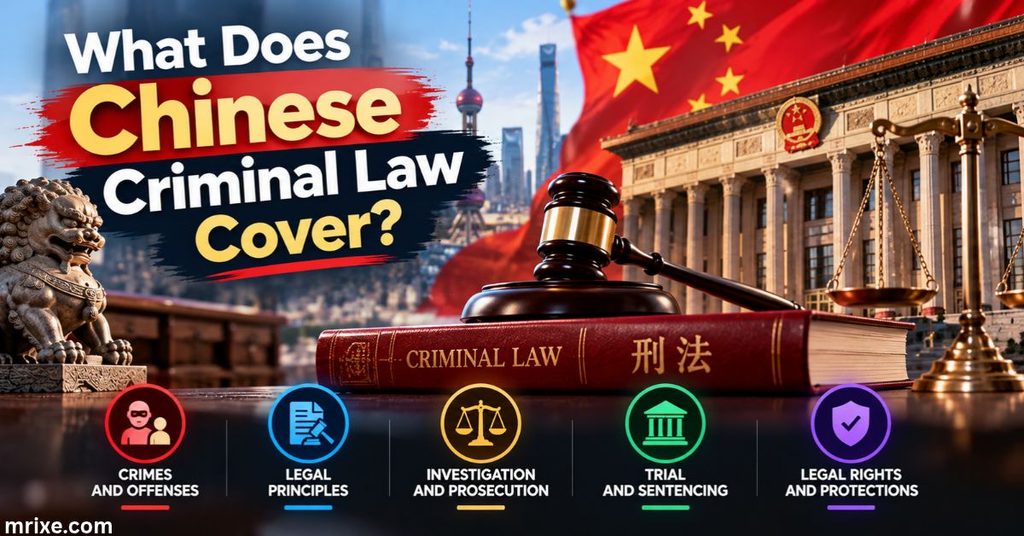
The Criminal Law took effect in 1997. Since then, the legislature has added a long series of numbered amendments rather than rewriting the whole text. That approach keeps the core stable while letting lawmakers react to new problems.
Amendment XII and Commercial Bribery
For business readers, Amendment XII matters most. The legislature adopted it on December 29, 2023, and it took effect on March 1, 2024. It raised penalties for bribers, especially people who offer bribes repeatedly or to several recipients. It also targets bribery aimed at state functionaries, supervisors, law enforcement officers, and judicial officers.
The amendment calls out heavier punishment for bribery tied to major national projects and to job placements or promotions. Sectors named for tougher treatment include finance, food and medicine, education, medical care, environmental protection, and workplace safety. It also touches private-sector corruption in state-owned enterprises.
What’s Moving in 2026
The criminal justice system saw several developments this year:
- Prison Law: lawmakers adopted the revised Prison Law on April 30, 2026
- Criminal Procedure Law: the 2026 legislative agenda lists a revision
- Anti-Cross-Border Corruption Law: a draft was released on August 28, 2026, and it remains a draft, not a law
Don’t treat a draft as binding. Track its progress until the legislature adopts a final text and sets an effective date.
Practical Takeaways for Companies
Most corporate criminal exposure comes from a short list of behaviors. Gifts, travel, and hospitality for officials top the list. Third-party agents who pay on your behalf come next. Sloppy accounting rounds out the trio. A written anti-corruption policy, plus regular audits of intermediaries, cuts risk fast.
How Do You Resolve Disputes? Arbitration, Mediation, and Courts
Contracts break. When they do, the dispute clause decides your fate. China’s arbitration framework changed in 2026, so older template clauses may now fall short.
The Revised Arbitration Law
The revised law took effect on March 1, 2026. It’s the biggest overhaul of the 1994 original in about three decades. It grew to 96 articles and introduced several modern features:
- Emergency interim relief so parties can seek urgent measures
- Stronger arbitrator disclosure duties to protect fairness
- Online arbitration provisions to match how disputes actually run
- Clearer rules for foreign-related cases, including limited room for arbitration seated in China without an institution in certain special cases
What to Do With Your Contracts
- Pull every contract with a China-linked arbitration clause
- Check the named institution and the seat
- Update templates for new agreements signed after March 1, 2026
- Ask counsel whether older agreements need amendments
Mediation Gets Its Own Regulation
The Commercial Mediation Regulation took effect on May 1, 2026. It’s the first stand-alone administrative regulation devoted to commercial mediation. Mediation costs less than a fight and often saves a business relationship. Consider adding a mediation step before arbitration in your next contract.
Illustrative case study: The supplier dispute.
A European importer and a Chinese factory disagree about defective parts. Their contract, signed in 2021, names an arbitration body but says little else. Both sides spend months arguing about procedure. With a modern clause covering the seat, language, interim relief, and a mediation step, the same fight could have ended in weeks.
Chinese Legal Changes in 2026: A Timeline
Dates blur together fast. This table keeps the year straight.
| Date | Development | Type |
|---|---|---|
| January 1, 2026 | Amended Cybersecurity Law takes effect | In force |
| March 1, 2026 | Revised Arbitration Law takes effect | In force |
| March 1, 2026 | Revised Foreign Trade Law takes effect | In force |
| April 30, 2026 | Revised Prison Law and Social Assistance Law adopted | Adopted |
| May 1, 2026 | Commercial Mediation Regulation takes effect | In force |
| August 28, 2026 | Draft Anti-Cross-Border Corruption Law released | Draft |
Looking ahead, the legislature’s 2026 agenda also points to finance-sector lawmaking, revisions to the People’s Bank of China Law and the Banking Regulation Law, and a revised Criminal Procedure Law. Expect more headlines before the year ends.
How Can You Check Whether Legal Information Is Reliable?
The internet offers more legal content than anyone can read. Quality varies wildly. This checklist works for any source, including cnlawblog and every blog like it.
Check the Date
Law ages quickly. Look for two dates: when the article went live and when the law took effect. A post from 2023 about the Company Law may predate the 2024 revision. If the page shows no date at all, treat it with suspicion.
Look for Primary Sources
A strong article links to the statute, the agency notice, or the court ruling it discusses. A weak one only links to other blogs. The official National Laws and Regulations Database run by the NPC is the gold standard for Chinese text.
Check the Jurisdiction
Mainland China, Hong Kong, and Macau differ. So do U.S. and Chinese rules, obviously. Some pages online blur these lines, and a reader can walk away believing a U.S. rule applies in Shanghai. Always ask: which legal system does this sentence describe?
Separate Information From Advice
Information explains how the law works in general. Advice applies the law to your facts. A blog can offer the first. Only a lawyer who knows your situation can offer the second. If a site promises “actionable legal advice” to anonymous readers, read that promise with care.
Review Authorship and Editorial Transparency
Who wrote it? Who checked it? How do they handle corrections? Named authors with real credentials beat anonymous posts every time.
Watch Translation Gaps
Most English versions of Chinese laws are unofficial translations. Word choices can shift meaning. When stakes run high, the Chinese text controls. Ask a bilingual lawyer to check key passages.
Spot Recycled or Auto-Generated Content
Search for a distinctive sentence from the article. If the same text appears across several unrelated domains, you may be reading recycled content. Duplicate pages with vague claims and no named authors are a classic warning sign.
A Fast Reliability Scorecard
| Question | Yes | No |
|---|---|---|
| Does the page show a recent date? | +1 | 0 |
| Does it link to the actual law? | +1 | 0 |
| Does it name the jurisdiction? | +1 | 0 |
| Does it name a qualified author? | +1 | 0 |
| Does it explain limits and offer corrections? | +1 | 0 |
Score 4 or 5: probably safe as a starting point. Score 2 or 3: verify everything. Score 0 or 1: skip it.
How Can You Follow Chinese Legal Developments and Trends?
Staying current doesn’t require a full-time job. It requires a system.
Build a Simple Tracking Routine
- Watch the legislature. The NPC Standing Committee meets several times a year and publishes its agenda in advance.
- Follow independent trackers. Projects such as NPC Observer and China Law Translate follow bills from draft to adoption.
- Monitor the agencies. The Ministry of Commerce, the Cyberspace Administration, and the State Administration for Market Regulation all issue rules that affect business.
- Subscribe to law firm alerts. Many international firms publish free updates on China.
- Set a monthly calendar reminder. Twenty minutes each month beats a panic once a year.
Track Three Dates for Every Change
For each development, write down the draft date, the adoption date, and the effective date. That tiny habit prevents costly confusion.
Trends Worth Watching After 2026
- AI governance: the Cybersecurity Law’s first AI article suggests more sector-specific rules ahead
- Data and cross-border flows: regulators keep refining thresholds and mechanisms
- Anti-corruption with an international angle: the draft Anti-Cross-Border Corruption Law signals growing attention to conduct beyond China’s borders
- Dispute resolution reform: arbitration and mediation both got major updates this year
- Finance-sector lawmaking: the 2026 agenda lists new and revised financial laws
When Should You Contact a Lawyer or Legal Professional?
A blog gets you oriented. Some moments call for real counsel.
Clear Signals You Need Help
- You plan to form a joint venture or a wholly foreign-owned company
- You’re about to sign a contract governed by Chinese law
- You need to move personal data out of China
- You’ve received a government inquiry or audit notice
- A trademark or competition dispute has started
- A deadline is approaching, such as a Company Law capital contribution deadline
What to Look For in Counsel
| Factor | Why it matters |
|---|---|
| PRC qualification | Chinese law needs a lawyer licensed to practice it |
| Sector experience | Rules for tech, finance, and manufacturing differ |
| Clear scope and fees | Prevents surprises mid-project |
| Language ability | Contracts and regulators often work in Chinese |
| Responsiveness | Time zones make slow replies painful |
Ask for a short written scope before work starts. It protects both sides.
FAQs About CNLawBlog and Chinese Law
What is CNLawBlog?
CNLawBlog is a name used by websites that publish legal explainers. Descriptions of it vary, so treat it as a general reading source rather than an authority. Verify any claim with the statute itself.
Is CNLawBlog a law firm?
Nothing reliable shows that it operates as a law firm. Reading a blog doesn’t create a lawyer-client relationship, so don’t treat its articles as advice for your situation.
Can I rely on CNLawBlog for legal advice?
No blog should serve as your sole basis for a legal decision. Use it to learn vocabulary and spot issues. Then confirm the law and consult a qualified lawyer.
Which Chinese laws matter most for foreign businesses?
Start with the Foreign Investment Law, the Company Law, the Civil Code, the PIPL, the Data Security Law, the Cybersecurity Law, the Anti-Unfair Competition Law, and the Arbitration Law. Add the Anti-Foreign Sanctions Law if you work in a sensitive sector.
How often does Chinese law change?
Often. In 2026 alone, a major cybersecurity amendment, a rewritten arbitration law, a revised foreign trade law, and a new mediation regulation all arrived within five months. Review your China compliance at least once a quarter.
Are English translations of Chinese laws official?
Usually not. They help with understanding but may differ from the Chinese text. For contracts and filings, rely on the Chinese version and a bilingual lawyer.
How do I verify a legal blog’s claims?
Check the date, find the primary source, confirm the jurisdiction, and look at who wrote it. Then compare the claim against the official text.
Conclusion: Use CNLawBlog and Similar Sites Wisely
Legal blogs can open doors. They can also mislead. The brand name cnlawblog shows up in many places with many descriptions, which makes your own verification habits more important than any single site.
Here’s the short version. Know the legal hierarchy. Track the 2026 changes: the amended Cybersecurity Law, the revised Arbitration Law, the new Anti-Unfair Competition Law rules, the Commercial Mediation Regulation, and the draft Anti-Cross-Border Corruption Law. Check dates, sources, jurisdiction, and authorship every single time.
Your next step is simple. Pick the one law from this guide that touches your work most. Read its official text. Then book a conversation with a PRC-qualified lawyer. A one-hour consultation costs far less than a surprise penalty.

Nathan Cooper is a humor writer who enjoys creating clever puns, witty jokes, and lighthearted content that brings smiles to readers. He loves sharing fresh, family friendly humor that’s fun, engaging, and easy to enjoy.