


If you’ve landed on an article about hobbies, board games, or classic sitcom trivia lately, there’s a decent chance you’ve already visited the LiveAbout website without clocking the name. It’s one of those sites that shows up in search results, answers your question, and then you forget where you were.
That’s not necessarily a knock it’s actually how most reference-style content sites work in 2026. But if you’re trying to figure out what the LiveAbout website really is, who runs it, and whether you should trust what it tells you, this guide breaks it all down in plain language.
No fluff, no filler. Just the facts you’d actually want to know before citing it, bookmarking it, or writing content that competes with it.
What Is the LiveAbout Website, Exactly?
The LiveAbout website is a lifestyle and entertainment publication that covers hobbies, games, music, movies, television, and pop culture trivia. It’s part of the Dotdash Meredith network — the same media company behind household names like People, Investopedia, The Spruce, and Better Homes & Gardens.
Think of LiveAbout as the “fun stuff” corner of a much bigger publishing operation. While sister sites handle health advice (Verywell), personal finance (The Balance, now folded into Investopedia), or home décor (The Spruce), LiveAbout exists for the topics that don’t fit neatly into “serious life admin.” Board games. Guitar chords. Sitcom plot holes. That kind of thing.
Here’s the quick-reference version:
| Attribute | Detail |
|---|---|
| Site name | LiveAbout |
| Parent company | Dotdash Meredith |
| Ultimate owner | IAC (NASDAQ: IAC) |
| Core topics | Hobbies, games, music, movies, TV, pop culture, humor |
| Content format | Guides, how-tos, listicles, reviews, trivia |
| Revenue model | Digital advertising |
| Site type | General-audience reference and lifestyle content |
That table alone answers most of the “what is it” question. But the why behind it — why LiveAbout exists in its current form, why it covers what it covers — makes a lot more sense once you know where it came from.
The Backstory: How About.com Became LiveAbout
You can’t really talk about the LiveAbout website without talking about About.com, because LiveAbout wouldn’t exist without it.
About.com started life in 1997 as The Mining Company, a New York-based site built around topic “guides” written by subject-matter enthusiasts. It changed its name to About.com in 1999 and spent the next decade and a half growing into one of the internet’s biggest general-reference sites — the kind of place you’d land on for everything from tax advice to guitar tabs to movie recommendations, all crammed under one roof.
By the mid-2010s, though, that “one roof for everything” model had a problem: Google and readers alike were starting to favor focused, authoritative sites over sprawling, generalist ones. So in 2016 and 2017, under CEO Neil Vogel, the company began breaking About.com apart into individual, topic-specific brands. Health content became Verywell. Home and food content became The Spruce. Personal finance became The Balance. Tech became Lifewire. And the company itself dropped the About.com name entirely, rebranding as Dotdash in May 2017.
Entertainment, hobbies, and pop-culture content — the stuff that didn’t fit neatly into those first few verticals — eventually got its own dedicated home too. That’s where LiveAbout comes in. It picked up the games, music, film, TV, and hobby content that used to live under the About.com umbrella and gave it a standalone identity.
In December 2021, Dotdash merged with Meredith Corporation (the longtime publisher of magazines like People and Better Homes & Gardens), forming Dotdash Meredith — now one of the largest digital and print publishers in the United States, with more than 40 brands under one corporate roof.
So when you’re reading a LiveAbout article today, you’re really reading the great-grandchild of a 1997 internet startup that’s been rebuilt, renamed, and reorganized more than once. That lineage matters, because it explains the tone: practical, guide-style, “here’s how to do the thing” writing rather than opinion journalism or breaking news.
What You’ll Actually Find on the LiveAbout Website
LiveAbout isn’t a single-topic site — it’s more of a grab bag of “things people do for fun.” That said, the content clusters pretty clearly into a handful of recurring categories. Here’s what actually shows up when you browse it.
Hobbies and Games
This is arguably the backbone of the site. You’ll find:
- Board game and card game guides — rules explanations, strategy tips, and recommendations for specific games
- Collecting guides — covering things like trading cards, coins, and other collectibles
- Craft and DIY hobby content — smaller-scale projects that don’t fit under The Spruce’s home-and-garden focus
- Party and game-night content — icebreakers, group games, and activity ideas
If you’ve ever searched “how to play [obscure card game]” or “rules for charades,” there’s a solid chance a LiveAbout guide answered that question for you.
Music
The music section leans toward accessible, practical content rather than music journalism or reviews of new releases. Expect:
- Artist and genre overview guides
- “Best of” style lists (albums, songs, artists by decade or genre)
- Instrument and music theory basics for beginners
- Lyrics interpretation and song meaning explainers
It’s written for casual music fans, not for readers who already subscribe to specialist music publications.
Movies and Television
This is one of the site’s busiest categories, and it covers a lot of ground:
- Show and movie recaps and explainers
- Character guides and cast breakdowns
- “Where to watch” and streaming guides
- Trivia and behind-the-scenes facts about classic and current shows
Because Dotdash Meredith content is built around search intent, this section tends to answer very specific questions — “who played [character],” “how many seasons does [show] have,” “what happened in the finale of [show]” — rather than offering critical analysis or opinion pieces.
Humor, Trivia, and Pop Culture
Rounding things out is a broader bucket of pop-culture ephemera: jokes, riddles, fun facts, “did you know” content, and light trivia that doesn’t fit neatly into games, music, or TV. This is the category most likely to surface in a casual Google search when you’re just trying to settle an argument or find a good icebreaker for a party.
Quick summary of the content mix:
| Category | Typical Content Types |
|---|---|
| Hobbies and Games | Rules guides, strategy tips, collecting advice |
| Music | Artist overviews, beginner guides, “best of” lists |
| Movies and TV | Recaps, character guides, streaming info |
| Humor and Trivia | Fun facts, jokes, pop-culture ephemera |
Who Writes for the LiveAbout Website?
Dotdash Meredith’s content model relies on named, credited writers rather than anonymous staff content — a practice the company carried over from About.com’s original “expert guide” concept, where individual contributors built authority around specific topics over time.
For LiveAbout specifically, that generally means writers with hands-on experience or genuine enthusiast knowledge in their beat — someone covering board games who actually plays them regularly, or a music writer with a real background in the genres they cover. Articles typically carry a byline, and many include a short author bio linking to the writer’s other work on the site.
This matters more than it might seem. A lot of low-quality content farms skip bylines entirely or rotate anonymous freelance writers through unrelated topics. LiveAbout’s structure, tied to the broader Dotdash Meredith editorial system, pushes against that by keeping writers in their lane and crediting them by name.
How Dotdash Meredith’s Editorial Standards Shape LiveAbout
Because LiveAbout doesn’t operate as a fully independent newsroom, its editorial DNA comes largely from its parent company. Dotdash Meredith has built its whole business model around a few consistent principles across its 40-plus brands:
- Fact-checked, expert-informed content — especially critical for higher-stakes verticals like Verywell (health) and Investopedia (finance), but the same review culture extends across the portfolio
- Fast-loading, low-clutter sites — Dotdash Meredith has marketed itself for years on running fewer ads and faster page speeds than typical publishers
- Search-intent-driven writing — articles are structured to directly answer the question a reader typed into Google, rather than burying the answer under a long narrative lead
- Regular content updates — older articles get revised rather than left to rot, which matters a lot for topics like “current cast of [show]” that change over time
For a site like LiveAbout, this translates into content that’s straightforward and scannable: short paragraphs, clear headers, and a direct answer near the top of the page. It’s not going to win awards for literary flair, but it’s built to be useful fast — which, frankly, is what most readers actually want when they’re looking up card game rules at 9 PM before a family game night.
Is the LiveAbout Website a Reliable Source?
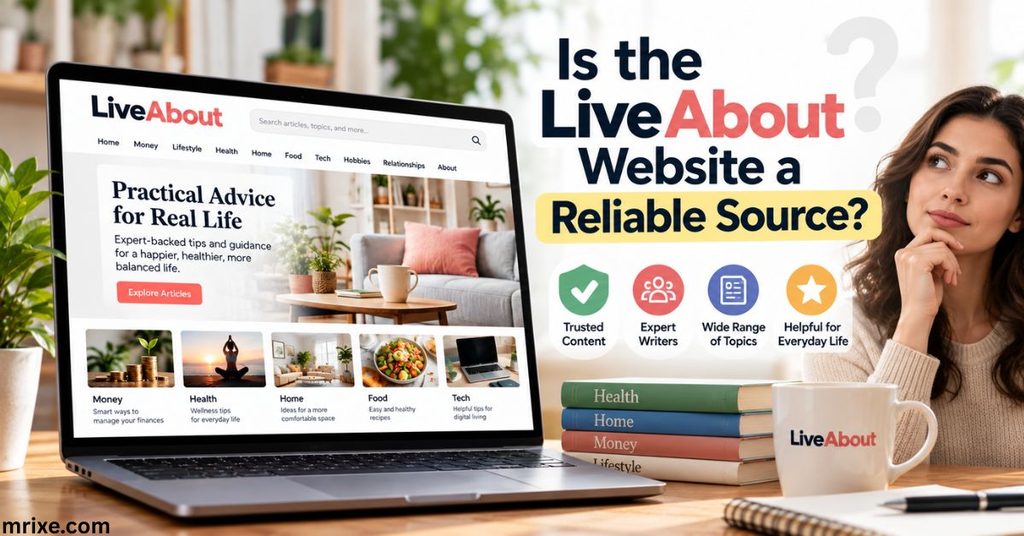
This is the question people actually care about, so let’s be direct about it.
For what it’s designed to do — casual, general-interest lifestyle and entertainment content — yes, LiveAbout is a reasonably reliable source. It’s professionally run, backed by a major publisher, and follows editorial practices (bylines, fact-checking processes, content updates) that put it well above random blogspam sites.
For anything requiring precision, currency, or specialized expertise, treat it as a starting point, not a final authority. A few reasons why:
- It’s a general-interest site, not a specialist publication. A dedicated board-game review site or a music history archive will typically go deeper than LiveAbout can.
- Content covering fast-moving topics (current TV casts, ongoing storylines, recently released games) can lag behind the latest developments if an article hasn’t been refreshed recently.
- Like most SEO-driven publishers, some articles are written to satisfy search intent efficiently rather than to explore a topic exhaustively.
A good rule of thumb: use LiveAbout to get oriented, then verify anything time-sensitive or high-stakes elsewhere. If you’re settling a bar bet about a TV show’s finale, LiveAbout is fine. If you’re citing something in academic or professional work, cross-check it against a primary source.
A useful way to think about it: LiveAbout is built to answer quick questions quickly — not to be the definitive last word on a subject.
How the LiveAbout Website Makes Money
Like nearly every site in the Dotdash Meredith portfolio, LiveAbout runs on digital advertising revenue. That’s the entire business model in one sentence: readers come for free content, ads generate revenue against that traffic, and the cycle repeats.
A few things worth knowing about how that plays out in practice:
- Programmatic display ads are the primary revenue driver — the banner and sidebar ads you see are typically sold through automated ad exchanges rather than direct sponsorship deals for most articles.
- Affiliate links show up in product-recommendation content (think “best board games for families” style articles), where the site earns a commission if you buy something through the link.
- No paywall. Unlike some Dotdash Meredith properties that lean into premium subscriptions (Investopedia has paid tiers, for example), LiveAbout’s content is free to read.
This ad-and-affiliate model is exactly why Dotdash Meredith has spent years publicly emphasizing fast page speeds and lighter ad loads as a competitive advantage — a slow, ad-cluttered page drives readers away before the ads even get a chance to earn anything. Speed isn’t just a UX nicety here; it’s directly tied to the revenue model.
Does the LiveAbout Website Use AI-Generated Content?
This is a fair question in 2026, given how much of the publishing industry has shifted toward AI-assisted workflows. Here’s the honest answer: Dotdash Meredith, like most large digital publishers, has publicly acknowledged experimenting with AI tools in parts of its content operation — things like structured data tagging, content optimization, and internal tooling. That’s common across the industry at this point, not unique to LiveAbout.
What’s less clear, and not something worth guessing at, is exactly how much of LiveAbout’s specific published content involves AI drafting versus human writing on any given article. The site still runs on named, bylined writers, which is a meaningfully different model than fully automated content farms that publish unattributed, machine-generated articles at scale.
If this matters to you — say, you’re researching the site for academic or journalistic purposes — the most reliable approach is to check individual article bylines and any editorial disclosure notes directly on the page, since publisher-wide AI policies tend to shift faster than general write-ups like this one can track.
Why People Still Visit the LiveAbout Website in 2026
Given how much competition exists for entertainment and hobby content, why does LiveAbout still pull in readers? A few real reasons:
- It ranks well for long-tail search queries. Questions like “how do you play [specific card game]” or “how many episodes are in [specific show]” are exactly the kind of niche, low-competition searches where an established, well-structured site has an advantage.
- It’s genuinely useful for quick lookups. Nobody’s settling in for a leisurely read here — they’re trying to solve a specific problem (learn a rule, remember a fact, find a gift idea) and move on.
- Nostalgia and brand recognition still count for something. Readers who grew up with About.com sometimes still recognize the lineage, even under the new name.
- The hobby and game-night niche keeps growing. Board games and card games have seen a sustained resurgence over the past decade, and that means steady demand for rules explanations and recommendations — exactly LiveAbout’s wheelhouse.
A quick example of how this plays out: imagine you’re hosting a game night and someone pulls out a card game nobody remembers the rules to. You grab your phone, search the game’s name plus “rules,” and a LiveAbout guide is the first result — clean layout, clear steps, no forty-paragraph life story before the actual rules show up. That’s the entire value proposition of the site in one everyday scenario, and it’s a scenario that plays out constantly across its various topic areas.
Getting the Most Out of the LiveAbout Website
If you’re going to use the site regularly, a few practical tips help:
- Search by specific topic rather than browsing. LiveAbout’s strength is answering narrow questions, so a direct search (“[game name] rules,” “[show] cast list”) usually gets you to useful content faster than clicking through category pages.
- Check the byline and publish/update date. For anything time-sensitive, a recently updated article is far more trustworthy than one that hasn’t been touched in years.
- Use it as a starting point for deeper hobbies. If a LiveAbout guide gets you hooked on a hobby, look for dedicated niche communities or specialist sites for the next level of depth.
- Don’t skip the related-article links. Because content is organized by topic cluster, related links at the bottom of an article often lead to genuinely useful follow-up reading.
- Treat product recommendations with normal skepticism. Like any ad- and affiliate-supported site, “best of” lists deserve the same healthy scrutiny you’d apply to any recommendation content.
Frequently Asked Questions About the LiveAbout Website
Is LiveAbout the same as About.com?
Not exactly. LiveAbout descends from About.com’s entertainment and hobbies content, but About.com itself no longer exists as a consumer-facing brand — it was broken apart into several standalone sites, LiveAbout being one of them.
Who owns the LiveAbout website?
Dotdash Meredith owns and operates it, and Dotdash Meredith itself operates as part of IAC.
Is LiveAbout free to use?
Yes. There’s no paywall or subscription required to read LiveAbout content.
What topics does LiveAbout NOT cover?
Don’t expect health, finance, home improvement, or hard news content here — those live on other Dotdash Meredith brands like Verywell, Investopedia, and The Spruce.
Can I trust LiveAbout for research or citations?
It’s fine for general, casual reference. For academic, professional, or high-stakes use, verify against a primary or specialist source.
Final Thoughts
The LiveAbout website isn’t trying to be everything to everyone — it’s a focused, ad-supported corner of a much larger publishing operation, built to answer the kind of quick, practical questions people ask about hobbies, games, music, and pop culture. It grew out of About.com’s long history, inherited a professional editorial structure from Dotdash Meredith, and settled into a niche that’s honestly pretty useful: fast, clear answers to the stuff that makes downtime more fun.
Is it the deepest possible source on any single topic? No. But that was never really the goal. For quick lookups, casual browsing, and settling the occasional game-night argument, it does exactly what it’s built to do.

Nathan Cooper is a humor writer who enjoys creating clever puns, witty jokes, and lighthearted content that brings smiles to readers. He loves sharing fresh, family friendly humor that’s fun, engaging, and easy to enjoy.