

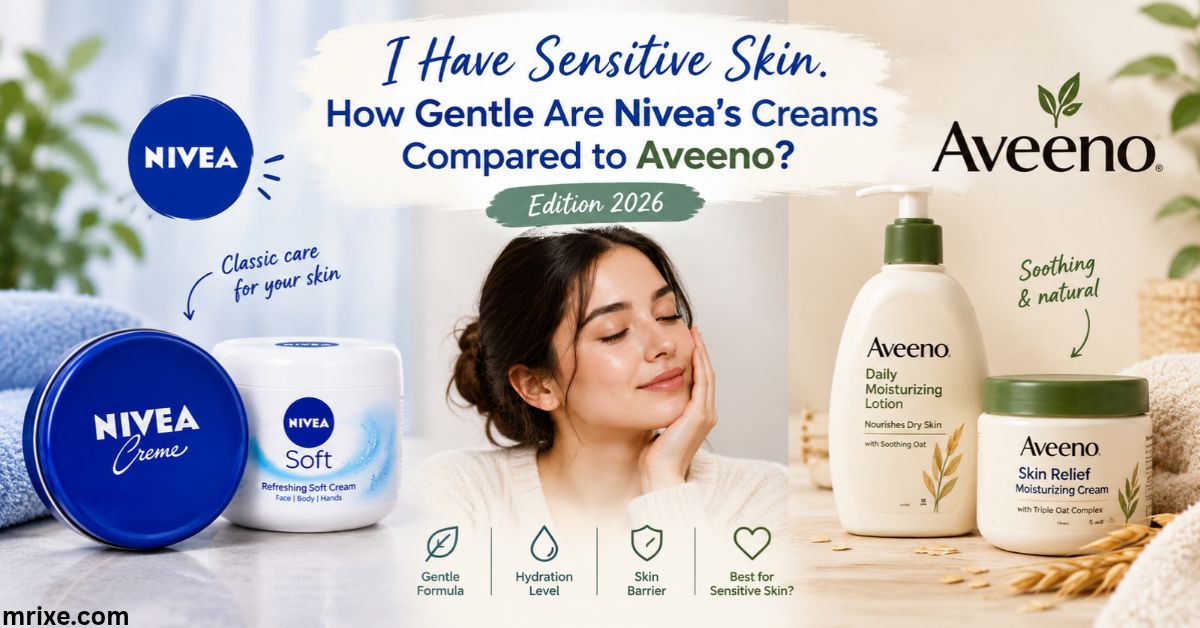
Last checked: October 2026. Formulas change often. Always read the label on the exact product you’re holding.
You squeeze a “gentle” cream into your palm. You smooth it over your cheeks. Ten seconds later your face stings. Sound familiar?
If so, you’re not alone. Many people ask the same thing: “i have sensitive skin. how gentle are nivea’s creams compared to aveeno?” The short answer is that neither brand wins across the board. Some Aveeno creams are gentler than some Nivea creams. Some Nivea creams work beautifully for certain people. It all comes down to the specific formula and your specific skin.
This guide gives you a clear, line-by-line comparison. You’ll learn what’s inside each cream, which ingredients cause trouble, and how to patch test at home. You’ll also see when to skip both brands and call a doctor.
Quick answer: Aveeno has more fragrance-free options. Nivea has richer, cheaper body creams, but its classic formulas contain fragrance and lanolin alcohol. If your skin reacts easily, start with a fragrance-free product and patch test it.
What “Sensitive Skin” Really Means
“Sensitive skin” isn’t a medical diagnosis. It’s a description of how your skin feels. People use the term when their skin stings, burns, itches, turns red, or feels tight after using certain products.
Several different problems can hide behind that label. Here are the most common ones:
- Dry skin (xerosis): The skin lacks water and oils. It feels rough and tight.
- Eczema (atopic dermatitis): A chronic condition with itchy, inflamed patches. The skin barrier is weaker than normal.
- Rosacea: Persistent facial redness. Flushing and visible vessels often come with it.
- Irritant contact dermatitis: A product damages the skin directly. Almost anyone can get it with enough exposure.
- Allergic contact dermatitis: Your immune system reacts to a specific ingredient. It’s personal and often delayed.
Irritation vs. Allergy: Why the Difference Matters
These two problems look alike but behave differently.
Irritation happens fast. You may feel burning or stinging within minutes. It often fades once you wash the product off.
Allergy works on a delay. The rash can show up 24 to 72 hours after you apply the cream. It can also spread beyond the spot where you used it. Once you develop an allergy to an ingredient, it usually sticks around.
Why care? Because the fix changes. With irritation, you may only need a simpler, gentler moisturizer. With a true allergy, you must avoid the exact ingredient for good. A patch test with a dermatologist can name it.
Why Ingredients Beat the Brand Name
Brands sell dozens of products. A single company can make a fragrance-free cream for eczema and a heavily scented lotion for summer. Both carry the same logo.
So the logo tells you very little. The ingredient list tells you almost everything.
The Three Label Checks
Before you buy any sensitive skin cream, scan for these:
- Fragrance: Look for “fragrance,” “parfum,” or scent chemicals like linalool and limonene.
- Known allergens: Lanolin alcohol, certain preservatives, and botanical extracts top the list.
- List length: Shorter lists usually mean fewer chances to react.
Formulas Change by Country and Over Time
Here’s a detail many shoppers miss. The Nivea tin you buy in Europe may not match the one sold in the US. Brands tweak recipes for local rules and supply reasons. They also reformulate without announcing it.
Tip: Compare the ingredient list on the box against the brand’s current product page. Do this every time you repurchase.
Ingredient Breakdown: What’s Inside Each Brand’s Core Creams
Let’s look at the products people buy most. The table below summarizes typical formulas. Ingredient lists vary by market and year. Treat this as a guide and confirm it against your own label.
| Product | Fragrance? | Key moisturizing ingredients | Ingredients to watch | Typical price tier |
|---|---|---|---|---|
| Nivea Creme (blue tin) | Yes | Mineral oil, microcrystalline wax, glycerin, panthenol | Fragrance, lanolin alcohol | Budget |
| Nivea Soft | Yes | Glycerin, vitamin E, jojoba oil, light emollients | Fragrance, some preservatives | Budget |
| Nivea fragrance-free or “Sensitive” lines (where sold) | Usually no | Glycerin, light oils, plant extracts | Varies by market. Check the label | Budget to mid |
| Aveeno Daily Moisturizing Lotion | Original: yes. A fragrance-free version also exists | Colloidal oatmeal, glycerin, dimethicone | Fragrance (original), preservatives | Mid |
| Aveeno Eczema Therapy Moisturizing Cream | No | Colloidal oatmeal, ceramide, glycerin, dimethicone | Rare oat sensitivity | Mid to higher |
| Aveeno Calm + Restore Oat Gel Moisturizer | No | Oat extract, feverfew, glycerin | Rare oat sensitivity, plant extracts | Mid to higher |
A note on price: Nivea creams usually cost less per ounce than Aveeno’s eczema-focused products. Sales and store brands shift prices constantly. Compare the per-ounce price on the shelf tag.
How Gentle Are Nivea’s Creams?
Nivea has been around for over a century. Its blue tin is one of the best-known moisturizers on earth. But “famous” and “gentle for reactive skin” aren’t the same thing.
What Works in Nivea’s Favor
The classic Nivea Creme uses a rich, occlusive base. Occlusive means it forms a layer on top of your skin and slows water loss. Mineral oil and wax do most of that work. Glycerin pulls water into the outer layer. Panthenol (a form of vitamin B5) helps skin feel softer.
For plain dry skin, this combo works well. Elbows, heels, and shins often love it.
What to Watch
The classic tin lists fragrance and lanolin alcohol. Both deserve attention if you have reactive skin.
- Fragrance: Fragrance mixes rank among the most common causes of cosmetic allergy. One tin may contain several scent chemicals.
- Lanolin alcohol: It comes from sheep’s wool. Most people tolerate it. A small group reacts to it, and reactions are more common on damaged skin.
Who Nivea Tends to Suit
- Dry skin with no history of fragrance or lanolin reactions
- Body areas that aren’t prone to flares
- People who want a thick winter cream on a budget
Who Should Be Careful
- Anyone in the middle of an eczema flare
- People who’ve reacted to perfumes, scented lotions, or wool
- Anyone applying the cream to the face if the skin already burns easily
Rule of thumb: If a cream smells strongly “like a classic cream,” it contains fragrance. Fragrance is the first thing to remove when your skin acts up.
Case Study: Maya and the Winter Tin
This is an illustrative example, not a clinical study.
Maya, 34, has dry skin on her arms and legs every winter. She never had a rash from skincare. She tried the blue Nivea tin and loved it. Her skin felt soft within a week. For her, a rich, inexpensive cream was a great fit.
Her sister Dana has eczema on her hands. She tried the same tin and felt itching by day three. Same product. Different skin. That gap shows why brand reputation can’t predict your result.
How Gentle Are Aveeno’s Creams?
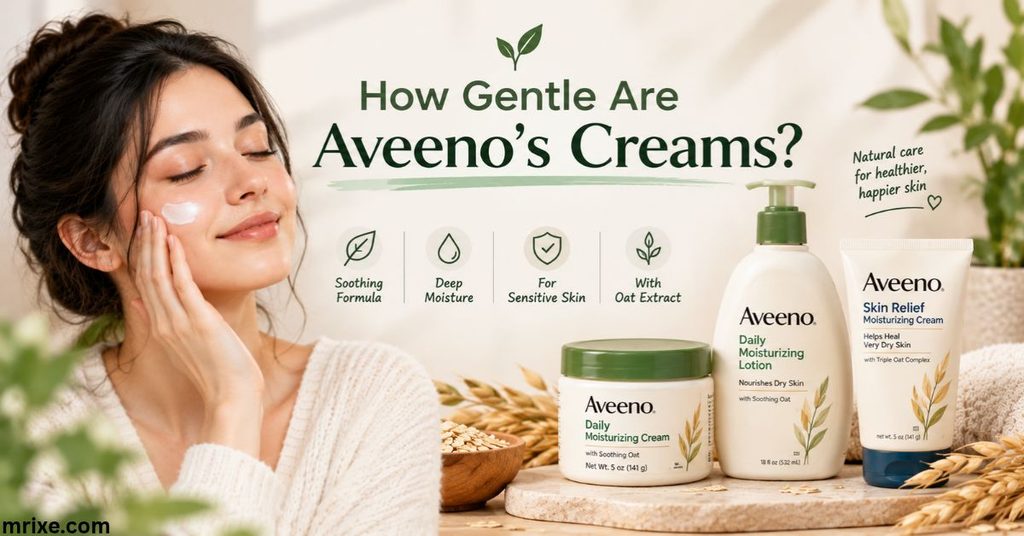
Aveeno built its name on one ingredient: colloidal oatmeal. That’s oat ground into a very fine powder that disperses in water. The US Food and Drug Administration (FDA) recognizes colloidal oatmeal as a skin protectant. It can ease dryness and itch.
What Works in Aveeno’s Favor
Oats contain starches, beta-glucans, and lipids. They calm the feeling of tightness and hold moisture on the skin. Many Aveeno formulas also include glycerin and dimethicone. These two add moisture and smoothness without a heavy feel.
Several Aveeno lines are fragrance-free. That matters a lot for reactive skin.
The National Eczema Association Seal
Some Aveeno products carry the National Eczema Association (NEA) Seal of Acceptance. The seal means a panel reviewed the product and its ingredients. The review checks for known irritants and allergens.
What the seal does tell you:
- The product passed a review for ingredients that commonly trigger eczema.
- The company agreed to follow the program’s rules.
What it doesn’t tell you:
- That you won’t react. No seal can promise that.
- That a product treats eczema. It’s a moisturizer, not a prescription.
Honest Limits
Aveeno isn’t perfect for everyone. Keep these points in mind:
- Oat allergy is rare but real. A few people react to oat proteins.
- Not every Aveeno product is fragrance-free. Some lotions contain fragrance. Check each label.
- Preservatives and emulsifiers can bother a small number of people. This is true for any brand.
Case Study: Jordan and the Itchy Patches
This is an illustrative example, not a clinical study.
Jordan, 28, has mild eczema on the inner elbows. A fragranced body lotion made the patches worse. Jordan switched to a fragrance-free oat cream and used it twice a day. The itching eased over about two weeks. Jordan still uses a prescription cream during bad flares. The moisturizer fills the gaps in between.
That’s a realistic picture. A good moisturizer supports your skin. It doesn’t replace medical treatment.
Nivea vs. Aveeno Head to Head
Time to put both brands side by side. Here’s how they compare on the points that matter most for sensitive skin.
| Category | Nivea | Aveeno | Edge |
|---|---|---|---|
| Fragrance-free options | Fewer. Check by market | Many, including eczema lines | Aveeno |
| Common allergens | Fragrance and lanolin alcohol in the classic tin | Fragrance in some lotions. Rare oat sensitivity | Aveeno |
| Texture | Thick, rich, slightly greasy | Lighter, faster-absorbing | Depends on preference |
| Eczema-prone skin | Use only fragrance-free types | Strong fit with eczema lines | Aveeno |
| Very dry body skin | Excellent. The tin is hard to beat | Good. Eczema cream works well | Nivea for thickness |
| Face use | Test carefully. Rich textures can feel heavy | Gel-cream and lighter lotions suit many faces | Aveeno |
| Price and availability | Lower price. Easy to find | Mid-range price. Widely sold | Nivea |
What the Table Tells You
Aveeno takes the lead for sensitive skin overall. The main reasons are fragrance-free options and eczema-focused formulas. Nivea earns points for value and richness.
Still, don’t treat this as a final verdict. A fragrance-free Nivea can beat a scented Aveeno lotion. The label always outranks the logo.
Fragrance, Fragrance-Free, and “Unscented”
Fragrance is the single biggest label issue for sensitive skin. Yet the wording on packages confuses almost everyone.
What the Terms Really Mean
- Fragrance-free: No fragrance ingredients were added to the product.
- Unscented: The product may smell neutral. It can still contain a masking fragrance that hides other odors.
- Hypoallergenic: The brand claims the product is less likely to cause allergy. No strict rule defines the word in many markets.
- Dermatologist-tested: Someone tested it. It doesn’t mean the product is safe for you.
- Natural: This word has no fixed legal meaning on most labels. Plant extracts and essential oils can cause allergic reactions too.
How to Spot Fragrance on a Label
Look for these words in the ingredient list:
- Fragrance
- Parfum
- Linalool
- Limonene
- Geraniol
- Citronellol
- Essential oils such as lavender or citrus oils
A Fair Counterpoint
Fragrance-free doesn’t mean reaction-free. Preservatives, emulsifiers, and plant extracts can trigger problems. Think of fragrance-free as a safer starting point. It isn’t a guarantee.
Simple test: If your skin reacts to a fragrance-free cream, the cause is likely something else on the list. Write down the ingredients. Compare them with other creams that bothered you.
Your Skin Barrier and Why Moisturizer Choice Matters
Your outer skin layer works like a brick wall. The “bricks” are skin cells. The “mortar” is a blend of fats called lipids. These include ceramides, cholesterol, and fatty acids.
When the wall stays intact, water stays in and irritants stay out. When it cracks, the opposite happens.
Signs of a Damaged Barrier
- Stinging when you apply products that used to feel fine
- Flaking or rough patches
- Tightness right after washing
- Redness that doesn’t settle
- New reactions to old products
Common Causes
- Long, hot showers
- Harsh cleansers
- Over-exfoliating
- Cold, dry air
- Frequent handwashing
What Helps Repair It
| Ingredient | What it does | Where you’ll find it |
|---|---|---|
| Glycerin | Pulls water into the skin | Both brands |
| Petrolatum | Seals in moisture | Some Aveeno products. Related mineral oils in Nivea |
| Ceramides | Replace lost lipids | Aveeno Eczema Therapy and similar lines |
| Colloidal oatmeal | Soothes itch and dryness | Aveeno’s signature ingredient |
| Panthenol | Softens and supports healing | Nivea Creme |
| Dimethicone | Smooths and protects | Many Aveeno formulas |
Tip: Apply moisturizer within a few minutes after you bathe. Damp skin locks in water better than dry skin does.
How to Patch Test Nivea or Aveeno on Sensitive Skin
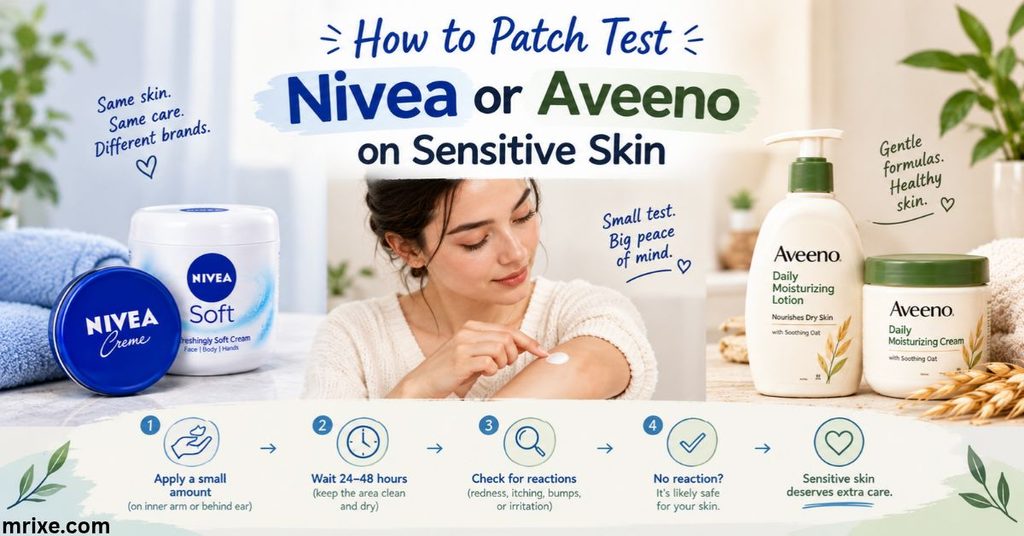
A patch test costs nothing. It takes a few days. It can save you from a week of redness.
Step-by-Step Method
- Pick a small spot. The inner forearm works well. The skin there is thin and easy to watch.
- Apply a pea-sized amount. Rub it in gently. Don’t cover it.
- Repeat once or twice daily for about five to seven days. Use the same amount each time.
- Watch for changes. Look for redness, itching, small bumps, swelling, or burning.
- Check again a day or two after you stop. Allergic reactions can appear late.
- Move to a small area of your face only if the arm stays calm. Try the jawline first.
When to Stop
Wash the product off and stop using it if you notice:
- Burning or stinging that doesn’t fade
- Spreading redness
- Blisters or oozing
- Swelling, especially around the eyes or lips
When to See a Doctor
Call a doctor if the reaction is severe or lasts more than a few days. Seek urgent care for swelling of the face or trouble breathing. A dermatologist can run formal patch tests. These can pinpoint the exact ingredient causing the trouble.
Important: Introduce only one new product at a time. If you try three creams at once, you won’t know which one caused the problem.
When Nivea Is the Better Pick
Nivea shines in certain situations. Don’t write it off just because it has fragrance in some formulas.
Choose Nivea when:
- Your skin is dry but healthy. No eczema, no known fragrance allergy, no wool sensitivity.
- You want a thick winter body cream. The rich texture holds up against cold wind and heated indoor air.
- Budget matters. Nivea usually costs less per ounce.
- You need a hand or foot cream. Thick textures work well on rough areas.
- A fragrance-free Nivea is sold where you live. Check the label to confirm.
Practical Tip
Use the classic tin on your shins, knees, and elbows. Skip your face and any irritated patch until you’ve tested it.
When Aveeno Is the Better Pick
Aveeno earns its reputation among people with reactive skin. Here’s when it makes the most sense.
Choose Aveeno when:
- Your skin is itchy or eczema-prone. Oat-based, fragrance-free formulas fit this need.
- You react to fragrance. Pick a clearly labeled fragrance-free line.
- You prefer a lighter feel. Many Aveeno lotions and gel-creams absorb quickly.
- You want an NEA Seal. Look for it on the front of the package.
- You need a face-friendly option. Gel-cream types often feel less heavy than a rich tin.
Practical Tip
Don’t buy by color or package style alone. Aveeno sells both fragranced and fragrance-free items. Flip the bottle and read the ingredients.
When to Skip Both Brands
Sometimes neither cream is the right answer. Over-the-counter moisturizers have limits.
See a dermatologist first if you have:
- Rosacea or perioral dermatitis. Some creams can make these conditions worse.
- Skin that stays inflamed after switching products. The problem may not be the cream.
- Weeping, crusting, or infected skin. You need medical treatment.
- Severe eczema. Prescription medicines may be necessary.
- Repeated reactions with no clear trigger. Formal patch testing can find it.
Case Study: Sam and the Mystery Rash
This is an illustrative example, not a clinical study.
Sam, 41, kept switching between brands. Each new cream caused red patches on the neck. Sam blamed the moisturizers. A dermatologist ran patch tests. The real trigger turned out to be a preservative found in a shampoo and several creams. Once Sam avoided it, the rashes stopped. The cream brand had never been the main problem.
Can You Use Nivea and Aveeno Together?
Yes. You can use both. But do it with a plan.
A Sensible Routine
- Face and flare-prone areas: A fragrance-free Aveeno cream or gel-cream
- Non-reactive body areas: Nivea Creme or Nivea Soft
- Hands in winter: Whichever product your skin tolerates best
Ground Rules
- Start one product at a time. Wait a week before adding the second.
- Don’t layer fragranced and fragrance-free products on irritated skin. The fragrance can still cause trouble.
- Keep a short log. Note what you used and how your skin felt. It helps you spot patterns.
Cream vs. Lotion vs. Gel-Cream: Which Is Best for Sensitive Skin?
Texture matters as much as ingredients. The wrong format can feel greasy or too thin.
| Type | Water content | Feel | Best for |
|---|---|---|---|
| Cream | Lower | Thick, rich | Very dry skin, winter, hands, feet |
| Lotion | Higher | Light, spreads easily | Mild dryness, large body areas, summer |
| Gel-cream | High | Cool, bouncy, fast-absorbing | Oily or combination skin, the face |
How to Choose
- In winter, reach for a cream. Cold air strips moisture quickly.
- In summer, a lotion often feels better.
- If your face breaks out or feels greasy, try a gel-cream.
- If you have eczema, thicker creams generally hold moisture better than thin lotions.
Frequently Asked Questions
Is Aveeno better than Nivea for sensitive skin?
Often, yes. Aveeno offers more fragrance-free products and eczema-focused formulas. But a fragrance-free Nivea can still beat a scented Aveeno. Always compare specific products.
Can Nivea cream irritate sensitive skin?
Yes. The classic tin includes fragrance and lanolin alcohol. Both can cause problems for some people. Patch test before you use it widely.
Is fragrance-free always better for sensitive skin?
It’s the safer place to start. But it’s not a promise. Other ingredients can still irritate your skin.
Can Aveeno cause irritation?
It can. Oat allergy is rare. Preservatives and other ingredients can also bother some people. Fragranced Aveeno lotions add another risk.
Should I use a cream or lotion?
Pick a cream for very dry skin and cold months. Pick a lotion for mild dryness and warm weather. Consider a gel-cream for your face if you get oily.
How long should I wait before judging a new moisturizer?
Give it several days to check for irritation. Wait two to four weeks to judge long-term results.
The Bottom Line: Which Cream Is Gentler for You?
Let’s return to the question that brought you here: “i have sensitive skin. how gentle are nivea’s creams compared to aveeno?”
Here’s the honest answer. Aveeno usually gives you more gentle choices, because more of its lines are fragrance-free and built for reactive skin. Nivea delivers great value and rich moisture. But its classic formulas include fragrance and lanolin alcohol. That’s a risk if your skin flares easily.
Your Screenshot-Ready Decision Rule
- Skin reacts to almost everything? Start with a fragrance-free Aveeno cream.
- Skin is dry but never reactive? A Nivea cream will probably do the job.
- Not sure? Patch test both for a week. One at a time.
- Still reacting? See a dermatologist.
Read the label. Choose fragrance-free if your skin is touchy. Test before you commit. Those three habits will protect your skin better than any brand name ever could.
For a quick refresher, jump back to the ingredient table near the top of this guide. Compare it with the label on the cream you’re holding today.

Nathan Cooper is a humor writer who enjoys creating clever puns, witty jokes, and lighthearted content that brings smiles to readers. He loves sharing fresh, family friendly humor that’s fun, engaging, and easy to enjoy.