
You stare at sixteen words. Nothing fits. You’ve burned two mistakes already and the grid still looks like alphabet soup.
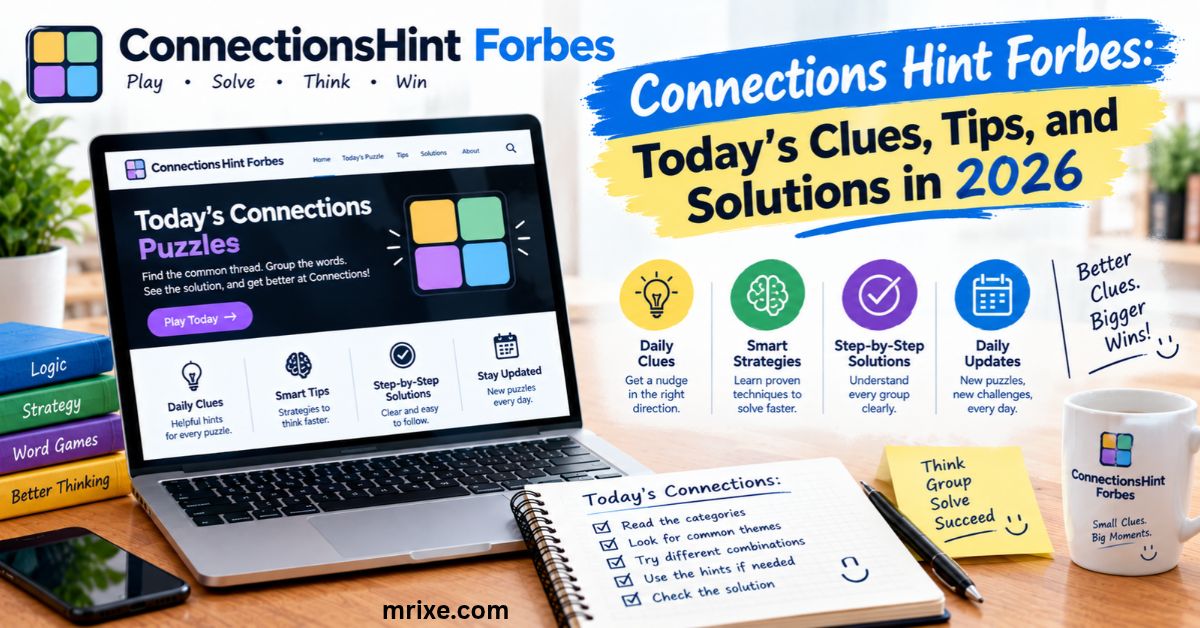
Sound familiar? Then you’re in good company. Millions of people play the New York Times Connections puzzle every day, and plenty of them hunt for a nudge when a group refuses to click. That’s where a Connections Hint Forbes search usually comes in.
This guide explains what that phrase means and how daily hint columns work. It also shows you how to use hints without wrecking the fun. You’ll get color-by-color difficulty breakdowns, the category tricks that show up again and again, and strategies that help you solve faster. We’ll finish with a full FAQ.
A quick note on formatting: this article uses one H1 (the title above) and H2, H3, and H4 headings everywhere else.
What Does “Connections Hint Forbes” Actually Mean?
Here’s the short answer. Forbes doesn’t make the puzzle. The New York Times does.
When people type “Connections Forbes today” or “forbes connections hints” into a search bar, they’re looking for a daily column on Forbes.com. That column walks readers through the day’s puzzle. Writers there publish hints, category names, and full answers so players can get unstuck.
Think of it like a sports radio show. The game belongs to the league. The commentary belongs to the broadcaster. The Connections Hint Forbes pages work the same way: they sit on top of the NYT puzzle and don’t replace it.
Why do people use these columns? Three reasons stand out:
- They want a small push and not the full answer.
- They want to check their solution after they finish.
- They want to protect a long winning streak.
You can see the original puzzle on the official NYT Connections page. The hint columns live on Forbes.
What Is NYT Connections?
Connections is a daily word-grouping game from New York Times Games. The NYT released it in beta in June 2023. It became a daily habit for a huge audience within a couple of years.
The pitch is simple. You see sixteen words. Four hidden groups of four words each lurk inside the grid. Your job is to find them.
The twist? Words love to wear disguises. A single word can fit three different groups. That’s where the fun (and the frustration) lives.
How the Game Works
Here’s the basic flow of a puzzle:
- You see a 4×4 grid of sixteen words.
- You pick four words that you think share a link.
- You hit Submit.
- The game tells you if you’re right, wrong, or “one away.”
- A correct group locks in and shows a color plus its category name.
- You repeat until all four groups are solved or you run out of mistakes.
You can shuffle the grid at any time. That sounds minor. It’s actually one of the best tools in the game, and we’ll get to why later.
The Goal of Every Puzzle
You win by solving all four groups before you make your fourth mistake. That’s it.
Simple goal. Tricky execution. Each puzzle is designed so that more than four words seem to fit at least one group. The puzzle editors build in traps on purpose. Spotting those traps is the whole skill.
Daily Reset Schedule
A fresh puzzle appears every day at midnight your local time. You can play it right away. Your streak resets if you skip a day, so some players log in the moment the clock turns.
Puzzles also carry a number. Since the first puzzle landed in June 2023, the count has climbed past 1,200 by late 2026. The number helps players share results and find past puzzles.
Basic Rules Every Player Should Know
Keep these in your back pocket:
- You get four mistakes. The fifth wrong guess ends the game.
- “One away” counts as a mistake. It helps you, but it still costs you a life.
- Every word belongs to exactly one group. No word is used twice.
- Groups are always four words. Never three. Never five.
- Colors show difficulty. More on that next.
- Results are shareable. You can post a grid of colored squares without giving away the answers.
What Do the Four Colors Mean in NYT Connections?
Color is the secret language of Connections. Each solved group lights up in yellow, green, blue, or purple. Those colors rank difficulty from easiest to hardest.
Here’s the cheat sheet:
| Color | Difficulty | What It Usually Looks Like | Example Link (Illustrative) |
|---|---|---|---|
| Yellow | Easiest | Direct, common links | Types of fruit |
| Green | Easy to medium | A bit more specific | Things you can “break” |
| Blue | Hard | Wordplay or trivia | Words hiding a body part |
| Purple | Hardest | Tricks, twists, or puns | Words that sound like letters |
These examples are ones I wrote to show the pattern. They aren’t pulled from a specific past puzzle.
One important thing to know: the colors don’t tell you which words belong where. The game only reveals the color after you solve a group. Still, knowing the difficulty ladder shapes how you think.
Yellow: The Easiest Category
Yellow groups are the friendly handshake. The link is usually direct and common, like types of cheese or words for “happy.” If you can describe the group in a few easy words, it’s probably yellow.
Here’s the catch. Yellow words often get stolen by harder groups. A word that looks yellow might actually belong to a trickier set. That’s why the safest-looking group isn’t always safe.
Green: Slightly More Challenging
Green steps up the thinking. You might need to spot a shared use, like items you can “jump” or “pitch.” The words feel familiar, but the link takes a beat longer to land.
Many players solve yellow and green first. Those two groups usually give you enough breathing room to tackle the rest.
Blue: Advanced Word Relationships
Blue is where wordplay starts to bite. You’ll see things like words that hide smaller words, fill-in-the-blank phrases, or trivia-based links. A group might include words that all precede or follow a certain word.
If a group seems to need a clever leap, think blue. Don’t expect a dictionary definition to save you.
Purple: Creative and Unexpected Connections
Purple is the boss level. The link is often a pun, a sound trick, or a pattern that has nothing to do with meaning. Think “words that become new words when you add a letter” or “words that sound like letters of the alphabet.”
Here’s a fun thing about purple. It often becomes obvious after you solve the other three groups. Four leftover words with no clear link? That’s purple, and you can work backward to find the trick.
How Forbes Covers the NYT Connections Puzzle
The daily Connections Hint Forbes columns follow a pattern that readers have come to expect. They guide you from the lightest nudge to the full solution. You pick how far down the ladder you want to go.
Daily Hint Format
Each column usually opens with a short rundown of the puzzle. You’ll typically find the puzzle number and date up top. Then come the clues.
Good hint columns keep the early lines vague on purpose. They give you a feel for the puzzle without handing you a group.
Progressive Clues Without Immediate Spoilers
The best hint systems work in layers. Here’s what a typical ladder looks like:
- Layer one: A broad theme hint, like “think about kitchen tools.”
- Layer two: A nudge about one specific group.
- Layer three: The category names, without the words.
- Layer four: The full answers.
You can stop at any layer. That’s the beauty of it. You control the spoiler dial.
Category Reveals
Category names show the link between words without listing the words. For example, “Things in a toolbox” tells you the rule but not which four words fit.
This layer is a sweet spot. It often gives you enough to finish a group yourself while still leaving some work to do.
Full Answers and Word Groups
At the bottom you’ll find every group with all four words. Some players jump straight here. Others save it for after they finish, just to compare notes.
There’s no wrong way. Your puzzle, your rules.
Puzzle Breakdown and Logic Explained
A strong column doesn’t just list answers. It explains the why. Why did that word belong in blue instead of green? What was the trap?
That explanation is where the real learning happens. Over time, you start to see the editors’ habits. And that makes tomorrow’s puzzle easier.
How to Use Connections Hints Without Spoiling the Puzzle
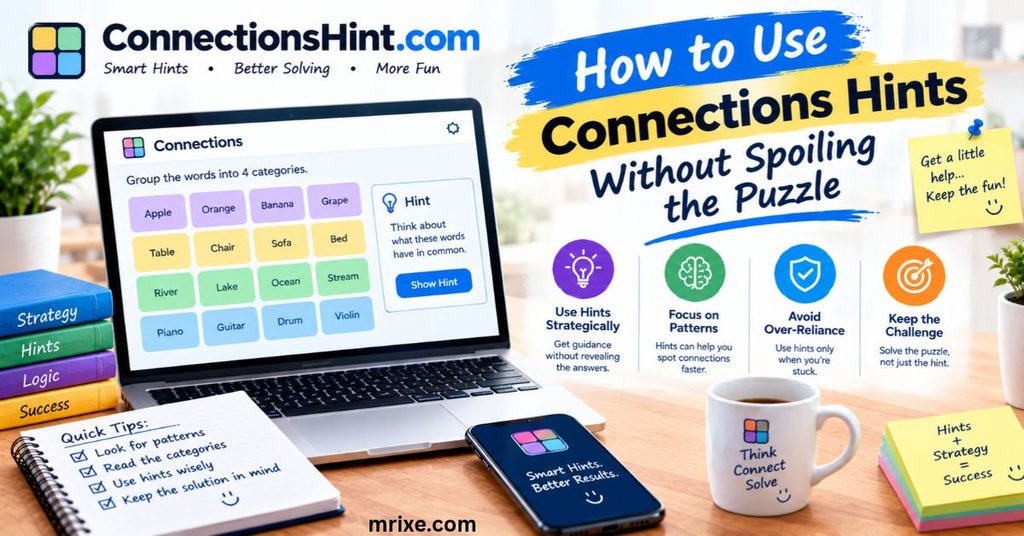
Hints can feel like a cheat code. Used well, they’re more like a coach standing beside you. You get just enough help to find the answer yourself.
Here’s a simple, spoiler-safe system you can follow every day.
Read Only the General Hint First
Start with the broadest clue. Cover the rest of the page with your hand if you have to.
A general hint often shakes loose one group. That alone might unlock the whole grid.
Solve One Group Before Viewing Another
After you crack one group, go back to the puzzle. Don’t scroll for more help yet.
Each solved group shrinks the grid. Sixteen words become twelve. Twelve become eight. Smaller grids are much easier to read.
Reveal Category Names Only When Needed
Category names are powerful. They tell you the rule behind a group. If you’re truly stuck, peek at one name and no more.
Pro tip: If you peek at a category name, try to guess the four words before you check. That keeps your brain in the game.
Check Full Answers After Finishing
Finished the puzzle on your own? Great. Now scroll to the full answers and compare.
You might find that you solved a group differently than the editors intended. That happens more than you’d think. And it’s a fun thing to notice.
Review the Explanation to Improve Future Performance
Don’t skip the logic breakdown. This is the part that makes you better.
Ask yourself two questions after each puzzle:
- Which group did I miss, and why?
- What trick did the editors use?
Write down the answers if you want. Within a few weeks, you’ll see patterns.
Today’s Connections Hints: How to Read Them the Smart Way
You want today’s help. Here’s how to get the most from any daily hint page.
First, check the puzzle number and date at the top. Hint pages for yesterday’s puzzle won’t help you today. It sounds obvious. It trips up plenty of people.
Second, look for a spoiler warning before the answers. Good columns separate hints from solutions with a clear break.
Third, decide your limit before you scroll. Maybe you’ll allow yourself one hint. Maybe you’ll allow category names only. Setting a rule up front stops you from sliding into the full answers on impulse.
A Sample Hint Ladder
Here’s a practice example I built to show how a ladder works. This is not from a real puzzle.
| Layer | Example Hint |
|---|---|
| General | “Today’s grid has a lot of things found in a garden.” |
| Group nudge | “One group involves things you can plant.” |
| Category name | “Garden tools” |
| Full answer | Rake, hoe, spade, trowel |
See how each layer gives a little more? That’s the structure to look for in any daily column. For the real thing, open the current Connections Hint Forbes column and follow your own spoiler rules.
The Most Common Category Types in NYT Connections
After enough games, you’ll notice the same tricks coming back. Puzzle editors love certain formats. Learn them and you’ll solve faster.
Synonyms and Similar Meanings
This is the classic. Four words mean roughly the same thing, like “big,” “huge,” “vast,” and “giant.”
It’s usually yellow or green. But watch out. Editors like to throw in a fifth synonym that belongs to another group.
Words That Follow or Precede the Same Word
These groups share a partner word. For example, “fire,” “sun,” “rain,” and “star” might all pair with “light.” You’d need to find the hidden partner.
These are very common in blue. The trick is to say each word out loud next to your guess partner.
Pop Culture References
Movies, music, TV shows, and famous people show up often. A group might be “Taylor Swift albums” or “Pixar films.”
Pop culture groups reward players who stay current. They also trip up players who don’t follow a topic. If a group feels like trivia, it probably is.
Idioms and Everyday Expressions
Sayings hide in plain sight. A group might be “___ the bucket” or “break the ___.”
Read the words like they’re pieces of a sentence. Many players solve these by speaking them out loud.
Homonyms and Multiple Meanings
Some words wear two hats. “Bark” can be a dog sound or tree skin. “Bat” can be an animal or a baseball tool.
These words create the best red herrings. A word with two meanings can fit two groups. Your job is to figure out which meaning the puzzle wants.
Prefixes, Suffixes, and Word Patterns
These groups focus on how words are built. Examples include:
- Words that gain a new meaning when you add a letter
- Words that contain a hidden smaller word
- Words that become new words when you remove the first letter
- Words that end with the same three letters
Look at spelling and not just meaning. Purple loves this category.
Proper Nouns and Brand Names
Brands, cities, and names often hide inside the grid. A group could be “car brands” or “famous Georges.”
Capital letters are your friend here. If a word looks oddly specific, it might be a name.
Sports, Science, Geography, and History Themes
Subject-based groups appear all the time. You might see chemical elements, rivers, Greek gods, or baseball positions.
You don’t need to be an expert. You just need to spot the shared field. If four words feel like they came from the same textbook, they probably did.
Quick-Reference Table
| Category Type | Typical Color | Best Detection Tip |
|---|---|---|
| Synonyms | Yellow/Green | Look for words with the same meaning |
| Partner-word links | Green/Blue | Say each word with a candidate partner |
| Pop culture | Green/Blue | Ask “do these share a franchise?” |
| Idioms | Blue | Read the words as a phrase |
| Multiple meanings | Any | List both meanings for each word |
| Letter patterns | Blue/Purple | Check spelling and hidden words |
| Names and brands | Green/Blue | Spot unusual capitalization |
| Subject themes | Green/Blue | Ask which field the words come from |
Proven Strategies to Solve NYT Connections Faster
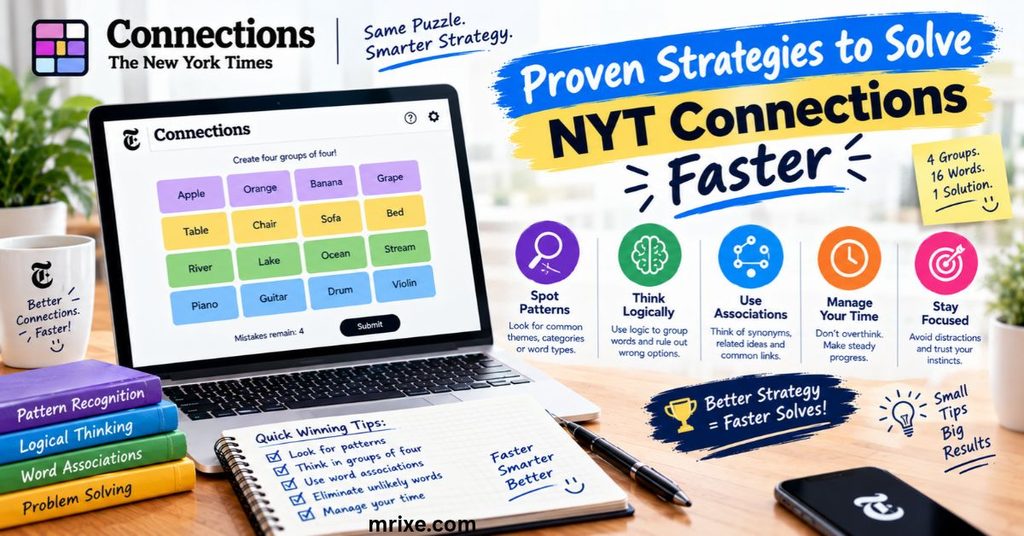
Ready for the good stuff? These tips come from how the puzzle is designed. Use them together and your win rate will climb.
Identify the Most Obvious Group First
Start with the group that feels safest. Solving it clears four words and gives you room to think.
But don’t rush. Make sure your four words aren’t stealing a word that belongs elsewhere. We’ll cover how in a moment.
Look Beyond Literal Meanings
The puzzle loves to hide a second layer. A word might look like a plain noun when it’s actually part of a phrase or a pun.
Ask yourself, “What else could this word be?” That question solves more puzzles than any dictionary.
Watch for Intentional Misdirection
Editors build in traps on purpose. A common one is the group of five: five words that all seem to fit a theme, but only four actually belong.
When you see five candidates, pause. One of them belongs to another group. Figure out which one and you’ve cracked two groups at once.
Here’s a worked example. This is a made-up case study to show the logic.
Case study: the group of five
Imagine a grid with these words: Jam, Butter, Bread, Toast, Honey, Lock, Block, Traffic.
- “Jam,” “butter,” “bread,” “toast,” and “honey” all feel like breakfast.
- But “jam” also means a traffic problem. It fits with “lock,” “block,” and “traffic.”
- That leaves “butter,” “bread,” “toast,” and “honey” as the breakfast group.
See how one word flipped the whole thing? That’s the pattern in action.
Group Words by Theme
Take a moment to sort the grid mentally. Group words that feel related, even if you’re unsure of the link.
You might find three words about weather and two about colors. Messy piles often reveal real groups.
Eliminate Impossible Matches
Some words simply can’t share a group. A very specific word, like a brand name, narrows the options fast.
Cross off what doesn’t fit. Fewer options means clearer thinking.
Save the Hardest Words for Last
Weird words that don’t fit anywhere often belong to purple. Don’t waste mistakes trying to force them.
Solve the three easier groups first. Then look at what’s left. Four leftover words usually point to the trick.
Think About Context Instead of Definitions
Definitions only get you so far. Context carries you the rest of the way.
Ask where you’d see each word. A kitchen? A baseball field? A movie? Context often exposes the group faster than a definition does.
Use the Shuffle Button
This one is underrated. Shuffling breaks the visual order and gives your brain a fresh view.
Words placed side by side can trick you into false links. A shuffle clears that out. Try it whenever you feel stuck.
Say the Words Out Loud
Sound matters, especially for homophones and idioms. Reading words aloud can reveal a pattern your eyes missed.
You’ll look a little silly. You’ll also solve more puzzles.
Pro tip: If you have a “one away” message, change one word at a time. Swap each candidate and think about which one doesn’t belong.
Common Mistakes That Cost Players the Puzzle
Most losses come from the same slips. Here’s what to avoid.
| Mistake | Why It Happens | How to Fix It |
|---|---|---|
| Locking in a group too fast | The first idea feels right | Check for a fifth candidate |
| Ignoring “one away” | Players guess in panic | Swap one word and rethink |
| Forgetting double meanings | We lock onto one definition | List two meanings per word |
| Chasing a theme that isn’t there | We want the pattern to exist | Look for a sturdier link |
| Guessing quickly after a miss | Frustration kicks in | Pause and shuffle |
| Starting with purple | It looks clever | Solve easy groups first |
Here’s the most common trap of all: rushing. You have four mistakes. That feels like a lot until you’ve burned three in a minute.
Slow down. Take a breath. A calm player beats a fast one.
Why Playing NYT Connections Every Day Makes You Better
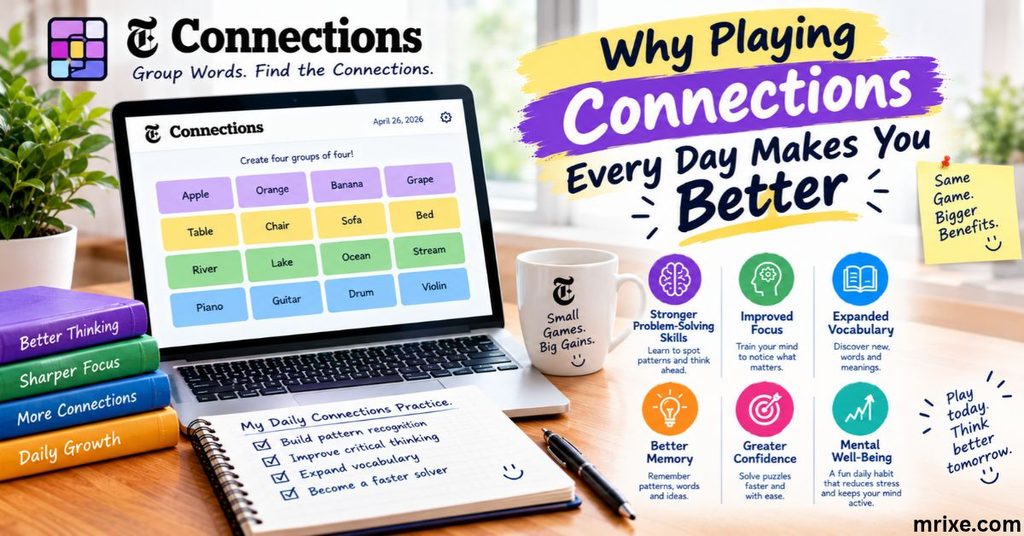
Daily practice builds real skill. You start noticing the editors’ habits. Certain tricks appear again and again.
Here’s what regular play sharpens:
- Vocabulary. You see new words and new meanings.
- Flexible thinking. You learn to hold two ideas at once.
- Pattern recognition. You spot formats faster.
- Patience. You learn not to guess in a hurry.
You don’t need a fancy plan. Five to ten minutes a day is plenty. Over a few weeks, puzzles that once felt impossible start to feel friendly.
Streaks also help. Many players say a daily streak keeps them coming back. It’s a small ritual with a built-in reward.
Where to Find Daily Connections Hints and Answers
Looking for today’s puzzle or help? You have several options.
To play the puzzle:
- Visit the official NYT Connections page.
- Open the New York Times Games app on your phone.
To get hints:
- Open the daily column. A search for Connections Hint Forbes will take you to the latest one.
- Look for hint pages that offer layered help.
- Avoid pages that show answers in the headline.
Pick a source that lets you control spoilers. That one feature matters more than anything else.
Can You Play Previous NYT Connections Puzzles?
Yes. The NYT keeps an archive of past puzzles. Subscribers to New York Times Games can browse and play older ones. Non-subscribers can generally play the current day’s puzzle for free.
The archive is a goldmine for practice. You can work through puzzles from different weeks and watch patterns emerge. It’s also a great way to train for tricky purple groups.
A few archive tips:
- Start with puzzles from a few weeks ago.
- Play several in a row to learn the editors’ style.
- Review the answers right after you finish.
- Note which category types give you trouble.
Since subscription terms can change, check the NYT Games site for current access rules.
Tips for Beginners Who Want to Improve Quickly
New to Connections? Welcome. The first week can feel rough. That’s completely normal.
Here’s a beginner’s playbook:
- Start with the obvious group. Build confidence with an early win.
- Learn the color order. Knowing that yellow is easiest helps you plan.
- Use hints sparingly. One nudge beats a full reveal.
- Review after every loss. The learning happens in the explanation.
- Don’t guess randomly. Each mistake is precious.
- Play at the same time each day. Habits stick.
And here’s a mindset tip. Losing isn’t failing. Every missed group teaches you a new trick. After enough rounds, you’ll recognize the traps before you fall into them.
Should beginners use hints? Yes. Hints work like training wheels. Use them until you feel steady. Then try a few puzzles on your own.
Connections vs. Wordle vs. Strands vs. The Mini Crossword
The NYT Games lineup offers something for every kind of brain. Here’s how the big ones compare.
| Game | Core Skill | Typical Time | Main Challenge |
|---|---|---|---|
| Connections | Grouping and lateral thinking | 3–10 minutes | Misdirection |
| Wordle | Letter deduction | 2–5 minutes | Limited guesses |
| Strands | Word search with a theme | 5–10 minutes | Finding the theme |
| The Mini | Quick crossword | 1–3 minutes | Speed and clues |
A few quick notes on each.
Wordle gives you six guesses to find a five-letter word. It’s about letters and not meanings. The NYT acquired it in 2022.
Strands asks you to find themed words in a letter grid. It features a special word called the “spangram” that spans the board. It launched in 2024.
The Mini is a small crossword that you can finish in a couple of minutes. It’s perfect for a coffee break.
Connections sits in the middle. It’s slower than the Mini. It’s more about ideas than letters. And it’s the only one that punishes you for being too clever.
There’s also a sports-flavored version from The Athletic, the NYT’s sports outlet. Sports fans may enjoy it as a companion to the main game.
Frequently Asked Questions About Connections Hint Forbes
What does Connections Hint Forbes mean?
It refers to the daily Connections hint columns that Forbes publishes. People search for them to get clues, category names, and answers for the NYT puzzle.
Does Forbes create the NYT Connections puzzle?
No. The New York Times creates and owns the puzzle. Forbes only publishes commentary and hints about it.
Are Forbes hints spoiler-free?
They’re designed to be layered. Early hints stay vague. Later sections reveal categories and answers. You decide how far to read.
What do the Yellow, Green, Blue, and Purple groups represent?
They show difficulty. Yellow is easiest. Green is a bit harder. Blue is tough. Purple is the trickiest and often involves wordplay.
Where can I play NYT Connections?
You can play on the NYT Games website or in the NYT Games app. Visit the official Connections page to start.
Can I play older Connections puzzles?
Yes. The archive lets you replay past puzzles. Subscribers get access to it. Check the NYT site for current rules.
What time does a new Connections puzzle appear?
A new puzzle appears at midnight your local time.
How many mistakes do I get?
You get four mistakes. The fifth wrong guess ends the game.
Is there a strategy that works for every puzzle?
No single trick wins every time. But a few habits help a lot: start with the safest group, watch for groups of five, use shuffle, and save purple for last.
Should beginners use hints or solve puzzles independently?
Beginners can use hints. Try to read only the lightest clue first. As your skills grow, lean on hints less.
Final Thoughts on Connections Hint Forbes
Connections is a small puzzle with a big following. It rewards curiosity and patience. It also rewards a willingness to look at a word from a new angle.
The daily Connections Hint Forbes columns give you a safety net. Used wisely, they help you learn without spoiling the fun. Start with the lightest clue. Solve one group at a time. Review the logic after you finish.
Do that for a few weeks and something shifts. Groups that once felt impossible start to click. You’ll catch the red herrings early. You may even catch yourself smiling at a clever purple.
So open today’s grid. Take a breath. And trust your gut a little more than you did yesterday.

Nathan Cooper is a humor writer who enjoys creating clever puns, witty jokes, and lighthearted content that brings smiles to readers. He loves sharing fresh, family friendly humor that’s fun, engaging, and easy to enjoy.